
How to Start an After-School Esports Program for Kids: Benefits, Challenges, and an Active Alternative
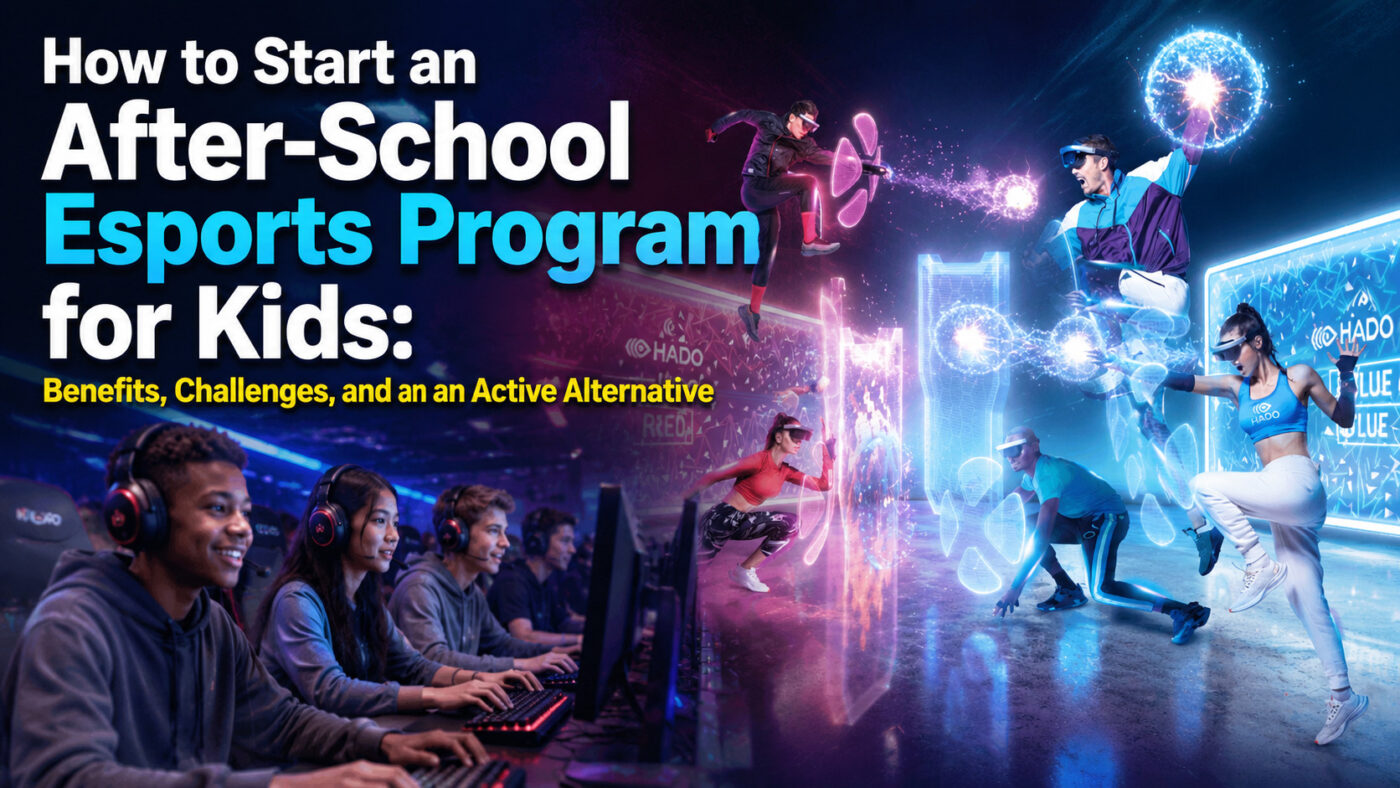
Learn how to start an after-school esports program for kids, including benefits, challenges, equipment, safety concerns, and why active esports such as HADO offer a new alternative to traditional screen-based programs.
After-school esports programs are becoming an increasingly popular way to engage children through gaming, teamwork, and structured competition.
For schools, youth organizations, STEM education providers, recreation centers, and family entertainment operators, esports can be an attractive new activity because many children already have a strong interest in games.
However, starting an after-school esports program is not simply about placing gaming PCs in a room. Operators need to think about educational value, parent expectations, safety, coaching, screen time, equipment, and how to differentiate their program from other activities.
This article explains what an after-school esports program is, why it is growing, what operators should consider before starting one, and why active esports such as HADO can offer a new alternative to traditional screen-based esports programs.
What Is an After-School Esports Program?
An after-school esports program is a structured activity where children participate in gaming-related learning, practice, teamwork, and competition outside regular school hours.
Unlike casual gaming at home, an after-school esports program is usually supervised by adults, coaches, instructors, or facilitators. It may include training sessions, team activities, communication exercises, tournaments, reflection, and lessons on digital behavior.
The purpose is not only to let children play games. A well-designed program can help children learn how to communicate, make decisions, manage emotions, work as a team, and improve through practice.
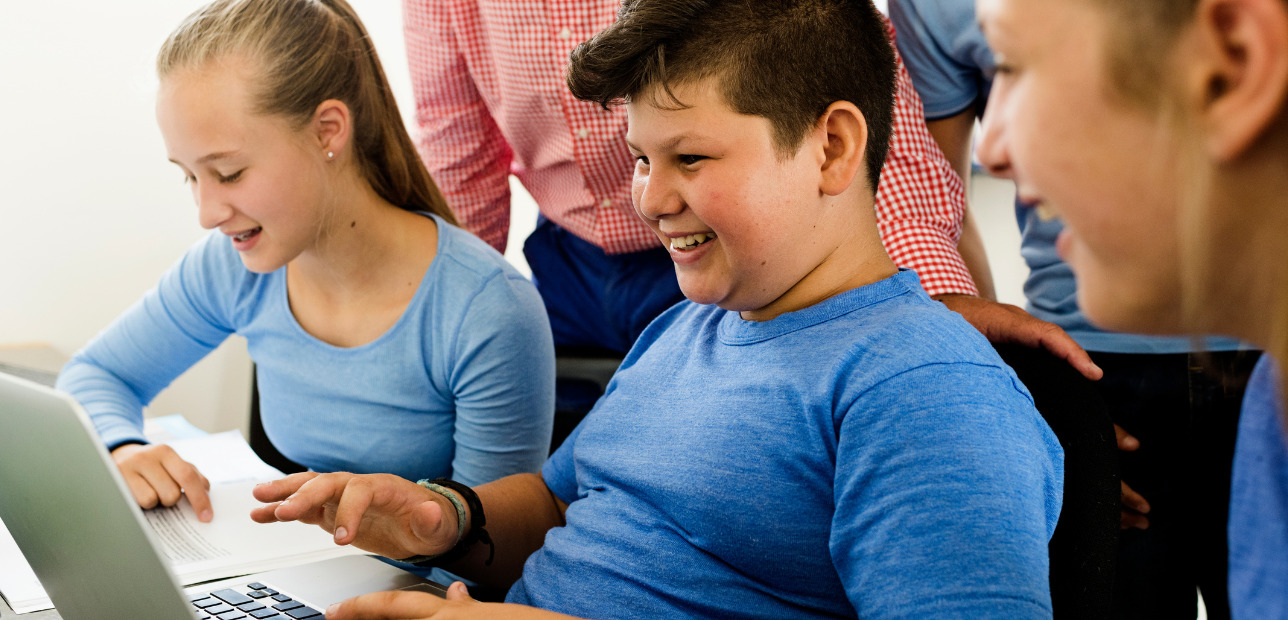
More than just letting kids play video games
One of the most important differences between casual gaming and an esports program is structure.
In casual gaming, children often play freely without a clear goal or guidance. In an after-school esports program, the activity is designed around learning objectives, team roles, feedback, and progress.
For example, children may learn how to analyze a match, discuss strategy with teammates, practice communication, review mistakes, and prepare for the next round. This turns gaming from passive entertainment into an active learning experience.
Common formats for after-school esports programs
After-school esports programs can take several forms depending on the operator, facility, and target age group.
- Weekly esports classes
- Team-based coaching programs
- School esports clubs
- Youth esports leagues
- STEM and esports programs
- Holiday camps and summer camps
- Short-term tournament events
- Active esports and AR sports programs
Some programs focus on competitive gaming skills. Others focus on teamwork, STEM learning, leadership, or digital citizenship. For business operators, the key is to define what kind of value the program provides beyond simply playing games.
Why After-School Esports Programs Are Growing
After-school esports programs are growing because they match several strong trends at the same time: children’s interest in gaming, parents’ demand for structured activities, schools’ interest in digital skills, and operators’ need for new youth-focused programs.

They build on children’s natural interest in gaming
Many children already enjoy games. This makes esports a powerful entry point for engagement.
Traditional after-school activities may not appeal to every child. Some children are not interested in conventional sports, music lessons, or academic tutoring. Esports can attract children who are already motivated by games and give them a structured environment where that interest can be guided in a more positive direction.
For operators, this is one of the biggest advantages of esports. The activity does not need to create interest from zero. It starts from something many children already care about.
They can support teamwork, communication, and problem-solving
Many esports titles require players to work together. Children need to share information, make decisions, assign roles, and respond to changing situations.
In a structured program, instructors can turn these moments into learning opportunities. Children can discuss what worked, what failed, how they communicated, and how they can improve as a team.
This is why esports can be positioned as more than entertainment. With the right structure, it can support teamwork, communication, strategic thinking, and problem-solving.
They can connect gaming with STEM and digital skills
Many after-school esports programs also connect gaming with STEM or digital literacy.
Depending on the curriculum, children may learn about technology, game design, streaming, broadcasting, data, online safety, hardware, software, or careers in the gaming and esports industries.
This makes esports attractive to education providers and parents who want children to develop skills that may be useful in the future.
They create a supervised and structured environment
Parents may be concerned when children spend long hours gaming alone at home. An after-school esports program can offer a more supervised environment.
With clear rules, adult guidance, time limits, teamwork, and reflection, gaming can become more intentional. Instead of being an isolated activity, it becomes a social and structured experience.
This difference is important for operators. The value of the program is not simply the game itself, but the environment created around it.
Who Can Offer an After-School Esports Program?
After-school esports programs can be offered by many types of organizations. The model is not limited to schools or esports companies.

Schools and school districts
Schools can offer esports as a club, after-school activity, or part of a broader digital learning initiative.
For schools, esports can be a way to engage students who may not participate in traditional extracurricular activities. It can also support teamwork, leadership, communication, and digital citizenship.
STEM education providers
STEM education providers can use esports as a way to make technology and problem-solving more engaging.
By combining gaming with structured lessons, STEM providers can create programs that connect entertainment with learning. This may include topics such as game mechanics, hardware, coding, broadcasting, analytics, or digital safety.
Recreation centers and youth organizations
Community centers, youth clubs, recreation facilities, and nonprofit organizations can use esports to attract young people into safe and supervised environments.
For these organizations, esports can become a modern youth activity that complements sports, arts, and other community programs.
Sports facilities and activity providers
Sports facilities and children’s activity providers may also consider esports as a new business category.
However, traditional screen-based esports may not fit every sports or activity facility. This is where active esports can be especially relevant, because it combines gaming elements with physical movement.
Family entertainment centers and commercial venues
Family entertainment centers, shopping malls, amusement facilities, and indoor activity venues are always looking for experiences that attract children and families.
Esports can be used not only as a regular program, but also as an event, trial session, birthday activity, group experience, or tournament-style attraction.
Key Benefits of After-School Esports Programs for Kids
When designed properly, after-school esports programs can provide several benefits for children.
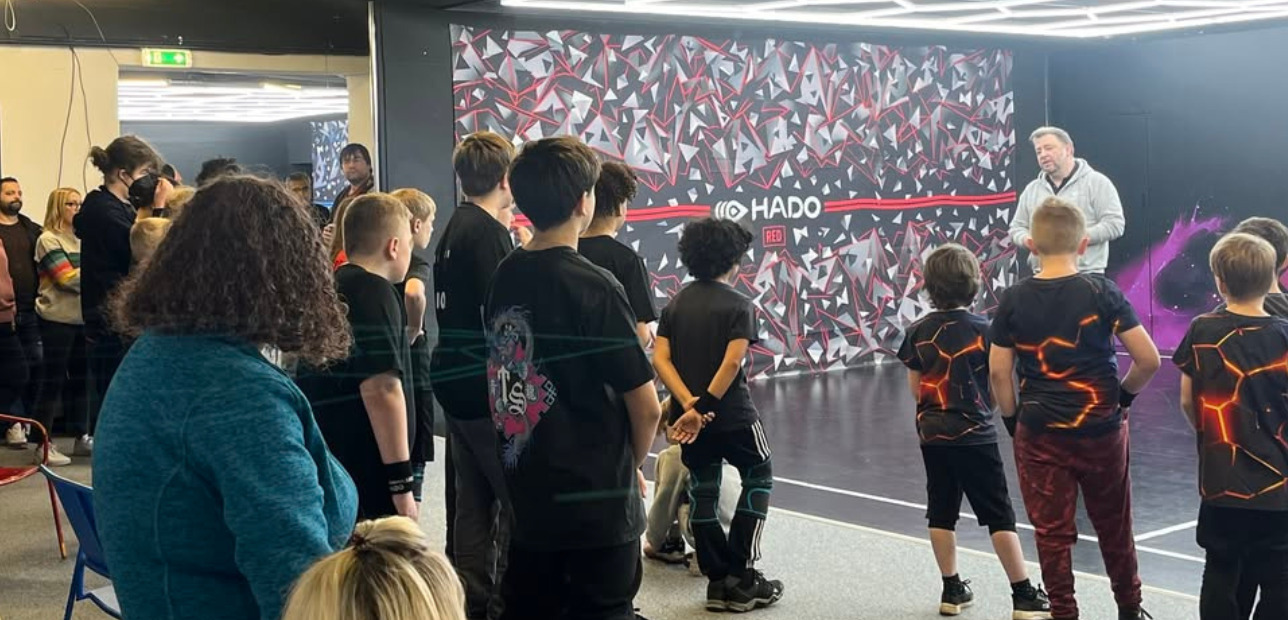
1. Teamwork and communication
Team-based esports requires children to communicate with others. They need to share information, listen to teammates, coordinate actions, and make decisions together.
This can help children practice communication in a real-time environment. They learn that success depends not only on individual skill, but also on how well the team works together.
2. Strategic thinking and problem-solving
Esports often requires quick thinking and strategy. Players must understand rules, predict opponents, choose tactics, and adapt to changing situations.
In a structured program, children can learn how to think about strategy, test ideas, review results, and improve through practice. This process can support problem-solving skills and a growth mindset.
3. Digital literacy and technology confidence
Esports can help children become more comfortable with technology.
Depending on the program, they may learn about devices, software, online communication, streaming, digital etiquette, or the broader technology behind games.
This can be valuable in a world where digital skills are increasingly important.
4. Inclusion for children who may not join traditional sports
Not every child feels comfortable in traditional sports. Some children may prefer strategy, games, technology, or teamwork in a different format.
Esports can provide another way for children to experience competition, belonging, and team identity.
This does not mean esports should replace physical activity. Rather, it can expand the range of activities available to different types of children.
5. Motivation, belonging, and community
Children often enjoy being part of a team or group with shared goals.
An after-school esports program can create a sense of belonging. Children can practice together, improve together, compete together, and celebrate progress together.
For operators, this community element is important because it can support retention, repeat participation, and word-of-mouth growth.
Challenges Operators Need to Consider
Although after-school esports programs have many benefits, operators also need to address several challenges.
These challenges are especially important because parents, schools, and community partners may have concerns about gaming.

Screen time concerns from parents
One of the biggest concerns is screen time.
Parents may ask whether an esports program simply adds more time in front of a screen. Even if the program teaches teamwork and strategy, this concern can become a barrier to enrollment.
Operators need to explain how the program is structured, how long children play, what they learn, and how screen time is managed.
Physical inactivity and posture
Traditional esports programs are often seated activities. Children may spend long periods sitting, looking at screens, and using keyboards, mice, or controllers.
This can create concerns about posture, eye strain, and physical inactivity.
For operators, this is a major point to consider. A program that includes movement, breaks, stretching, or active play may be easier for parents and schools to support.
Online safety and behavior management
Many esports titles involve online communication. This means operators must think about safety, privacy, language, behavior, and moderation.
Programs should have clear rules for communication, respectful behavior, online interaction, and conflict resolution.
Without these rules, esports programs can be difficult to manage and may create concerns for parents and schools.
Equipment, space, and network requirements
Screen-based esports programs often require gaming PCs, consoles, monitors, headsets, chairs, software, accounts, and a strong internet connection.
For some operators, this equipment investment can be significant. Maintenance, updates, storage, security, and network stability also need to be considered.
This is one reason operators should carefully choose the format of their program before investing.
Game title selection and age appropriateness
Choosing the right game titles is another challenge.
Operators must consider age ratings, violence, online interaction, learning value, accessibility, and whether the game is appropriate for the target age group.
A popular game is not always the best choice for a children’s program. The best choice is one that fits the program’s goals, safety standards, and parent expectations.
Differentiation from other esports programs
As youth esports grows, more programs may begin to look similar. Many operators may offer the same games, similar coaching, and similar league formats.
This creates a business challenge. If a program looks like every other screen-based esports program, it may be difficult to stand out.
Operators need a clear reason why parents, schools, and partners should choose their program.
What You Need to Start an After-School Esports Program
Before starting an after-school esports program, operators should define the concept, target audience, learning goals, and operational model.

Program concept and target age group
The first step is to decide who the program is for.
A program for elementary school children should be different from a program for teenagers. Younger children may need simpler rules, shorter sessions, and more physical activity. Older students may be more interested in competition, strategy, and advanced coaching.
Operators should define the target age group before choosing games, equipment, instructors, and pricing.
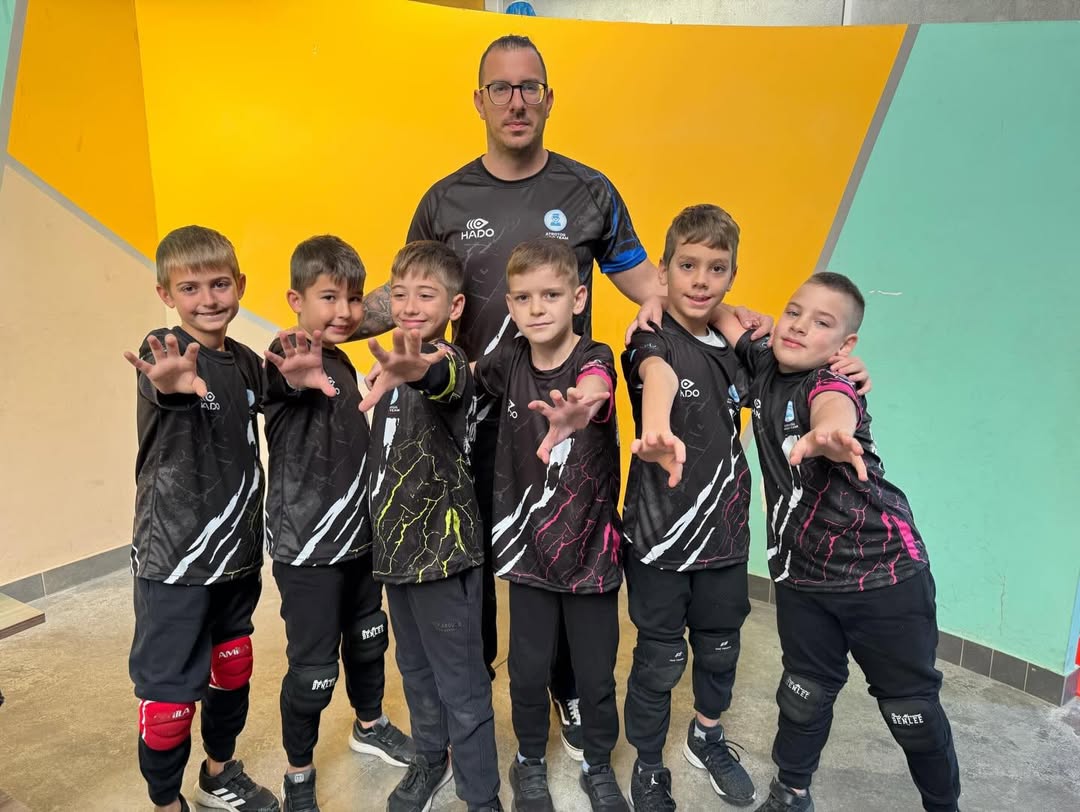
Coaches or facilitators
A strong program needs good facilitators.
They do not always need to be professional esports players. In many cases, the most important skills are communication, child supervision, program management, and the ability to turn gameplay into learning.
For children’s programs, instructors must be able to create a safe, positive, and encouraging environment.
Curriculum and session structure
A program should have a clear structure.
Each session may include warm-up activities, skill practice, team discussion, gameplay, review, and reflection. Without structure, the program can feel like ordinary gaming time.
A curriculum helps operators explain the value of the program to parents, schools, and partners.
Safe rules for play and communication
Rules are essential in children’s esports programs.
Programs should set expectations for respectful communication, teamwork, fair play, online interaction, equipment use, and behavior after winning or losing.
This is especially important because esports can be emotionally intense. Children need guidance on how to compete in a healthy way.
Hardware, software, and venue setup
Operators need to consider the physical setup of the program.
For screen-based esports, this may include gaming PCs, consoles, monitors, chairs, headsets, network equipment, and game accounts.
For active esports or AR sports, the setup may involve a play area, sensors, headsets, safety rules, and staff support.
The right setup depends on the program’s goals and business model.
Parent-facing explanation of educational value
Operators should prepare a clear explanation for parents.
Parents may ask why esports is useful, how it differs from gaming at home, how screen time is managed, and what their child will learn.
A strong program should be able to explain its value in simple language: teamwork, communication, strategy, confidence, technology skills, and healthy competition.
Typical Models for After-School Esports Programs
There are several ways to design an after-school esports program. Each model has different strengths and challenges.
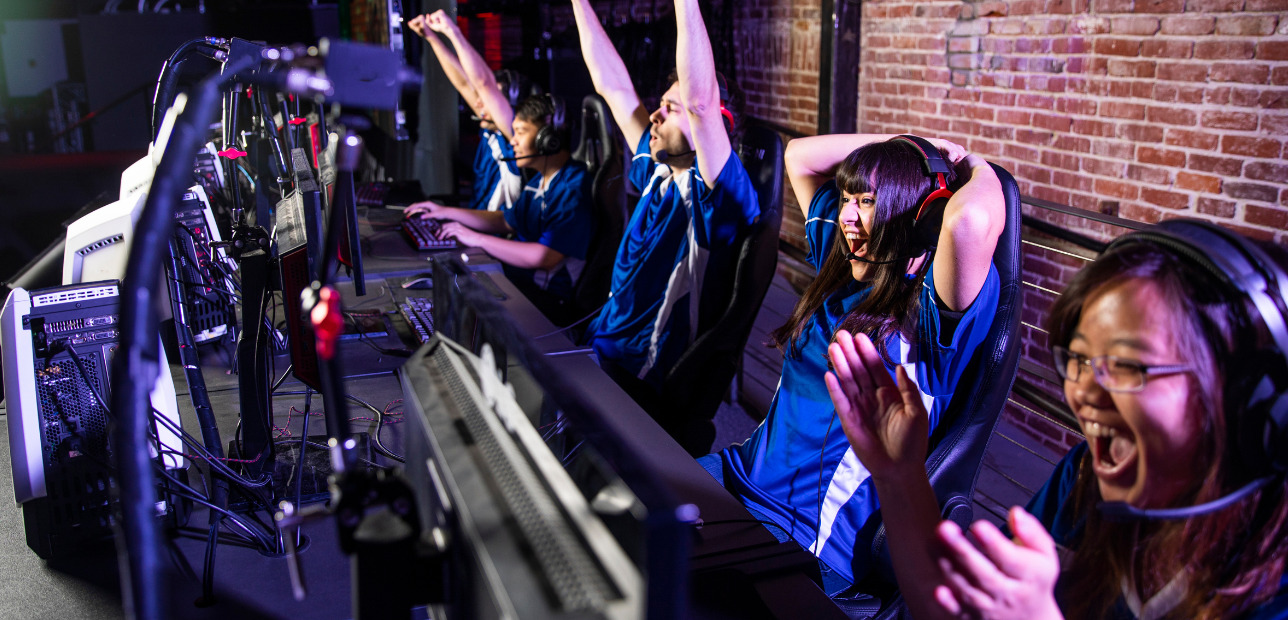
Screen-based esports coaching
This is one of the most common models.
Children practice specific game titles under the guidance of a coach. They may learn mechanics, tactics, team roles, and competitive strategy.
This model can work well for children who want to improve at specific games, but it may increase parent concerns about screen time and sedentary activity.
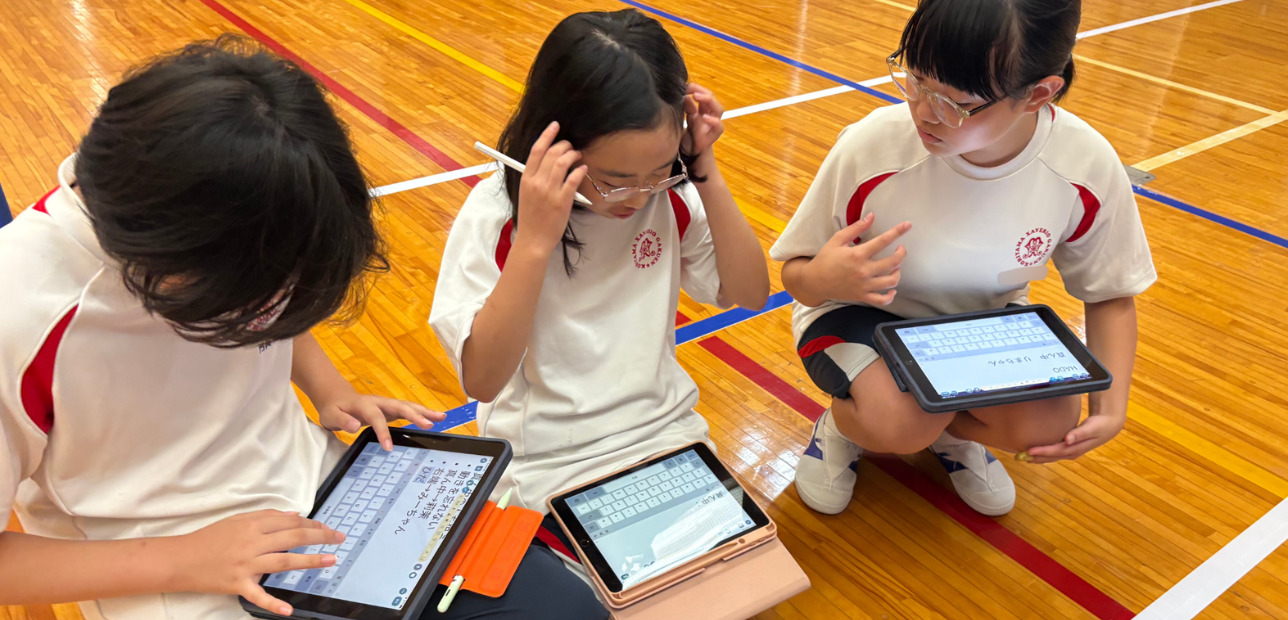
STEM and esports education programs
Some programs combine esports with STEM learning.
These programs may include lessons on technology, game design, broadcasting, coding, analytics, or digital safety.
This model can be attractive to parents and schools because it connects gaming with education.
League and tournament-based programs
Some programs are built around teams, leagues, and tournaments.
This can create excitement, goals, and a sense of progress. Children can practice toward competition and experience teamwork in a more serious environment.
However, operators must be careful not to overemphasize winning. The program should still support learning, inclusion, and positive development.
Summer camps and short-term programs
Esports can also be offered as a short-term camp during school breaks or holidays.
This model is useful for testing demand, attracting new participants, and introducing esports without requiring a long-term commitment.
Active esports and AR sports programs
Active esports and AR sports combine digital gameplay with real physical movement.
This model can be especially interesting for operators who want to offer something different from traditional screen-based esports.
It can also address parent concerns about children sitting for long periods, because the activity involves movement, teamwork, and face-to-face communication.
Why Screen-Based Esports Alone May Not Be Enough
Screen-based esports can be valuable, but it may not be enough for every operator or every audience.
For a business or organization trying to build a children’s program, differentiation is critical. Parents, schools, and community partners need a clear reason to choose the program.
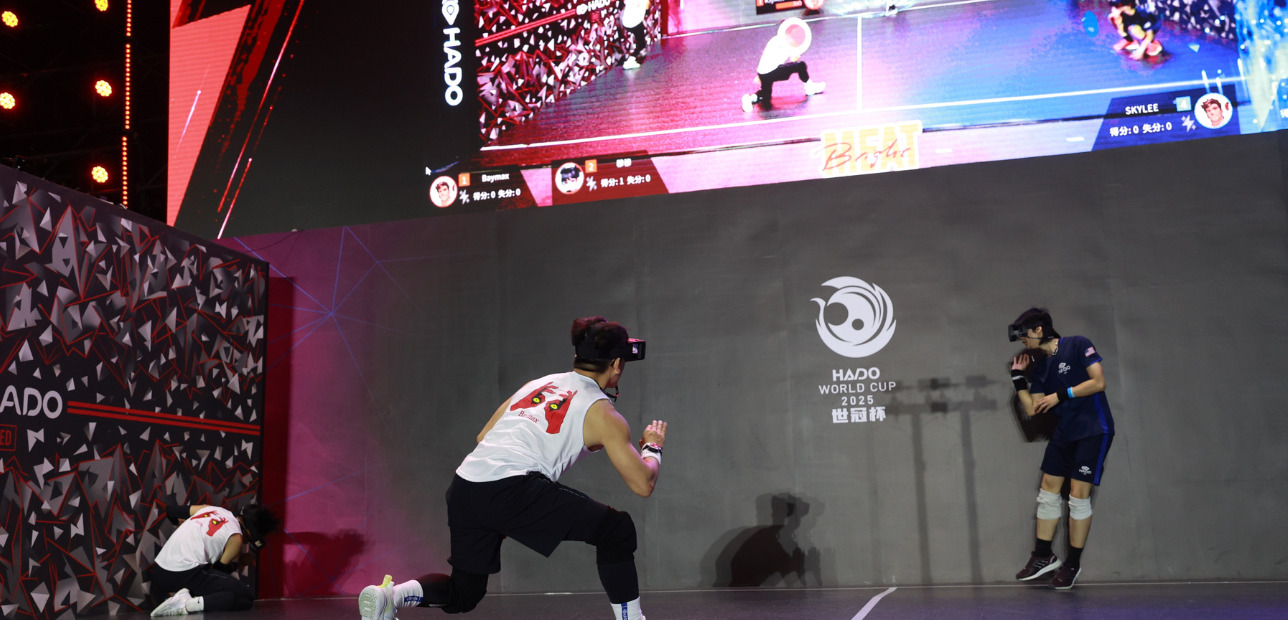
Parents may worry about more screen time
Even if esports teaches teamwork and strategy, many parents may still see it as more screen time.
This can make it harder to convince families, schools, or community partners that the program is beneficial.
Operators need a strong answer to the question: “How is this different from my child just playing games at home?”
Many programs look similar to each other
If many programs use the same game titles, similar coaching language, and similar tournament formats, differentiation becomes difficult.
A program needs a unique value proposition. This may come from curriculum, coaching quality, community, technology, physical activity, or a new format of esports.
Physical activity is often missing
Traditional esports usually focuses on digital play. Physical movement is limited.
For children’s programs, this can be a challenge because many parents and schools value activities that support physical health as well as mental and social development.
Adding physical movement can make an esports program more acceptable and more attractive to a wider audience.
Operators need a stronger reason for families to choose their program
From a business perspective, simply offering esports may not be enough.
Families may compare esports with sports, coding classes, dance, martial arts, tutoring, or other after-school activities. To compete with these options, an esports program needs a clear benefit.
This is where active esports can create a stronger story.
Active Esports: A New Alternative for Kids’ Programs
Active esports is a new approach that combines the excitement of gaming with real physical movement.
Instead of sitting in front of a screen, children move, dodge, aim, communicate, and compete in a physical space. This creates a different experience from traditional esports while still keeping the strategic and competitive elements of gaming.
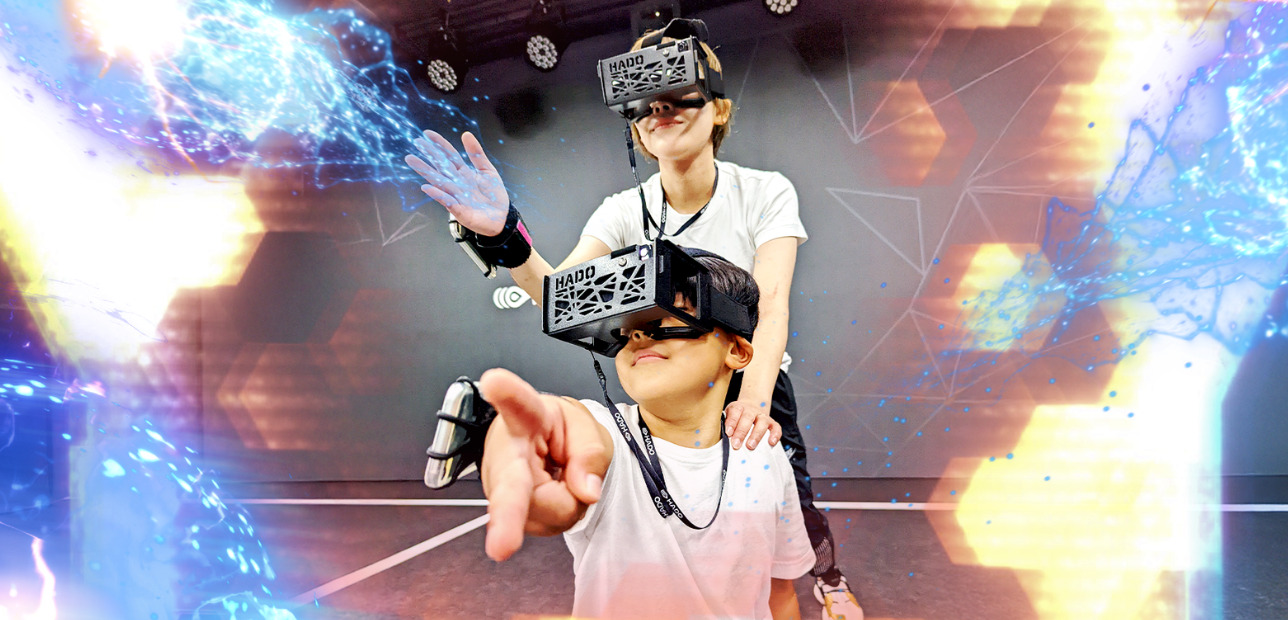
Combining gaming excitement with real physical movement
One of the biggest advantages of active esports is that it connects digital play with physical activity.
Children can enjoy the game-like excitement of energy attacks, shields, scores, and competition while also moving their bodies.
This can help operators position the program as more than gaming. It becomes an active, social, and competitive experience.
Creating face-to-face teamwork and communication
In many screen-based esports programs, communication happens through headsets or online chat.
In active esports, children communicate face-to-face. They see teammates, move together, call out strategies, and react in real time.
This can make teamwork more visible and easier for parents, instructors, and spectators to understand.
Making esports more event-friendly and spectator-friendly
Active esports can also be easier to present as an event.
Because players are moving in a physical space, spectators can see the action more clearly. This can make the program more exciting for trial sessions, open days, tournaments, birthday events, and group activities.
For operators, this event potential can support marketing and customer acquisition.
Reducing the “just sitting and gaming” concern
One of the strongest business advantages of active esports is that it directly addresses a common parent concern.
Parents may worry that esports means sitting and staring at a screen. Active esports changes that perception by adding movement, teamwork, and physical engagement.
This does not mean screen-based esports has no value. Rather, active esports gives operators another option, especially when they want to appeal to parents, schools, and communities that care about physical activity.
What Is HADO?

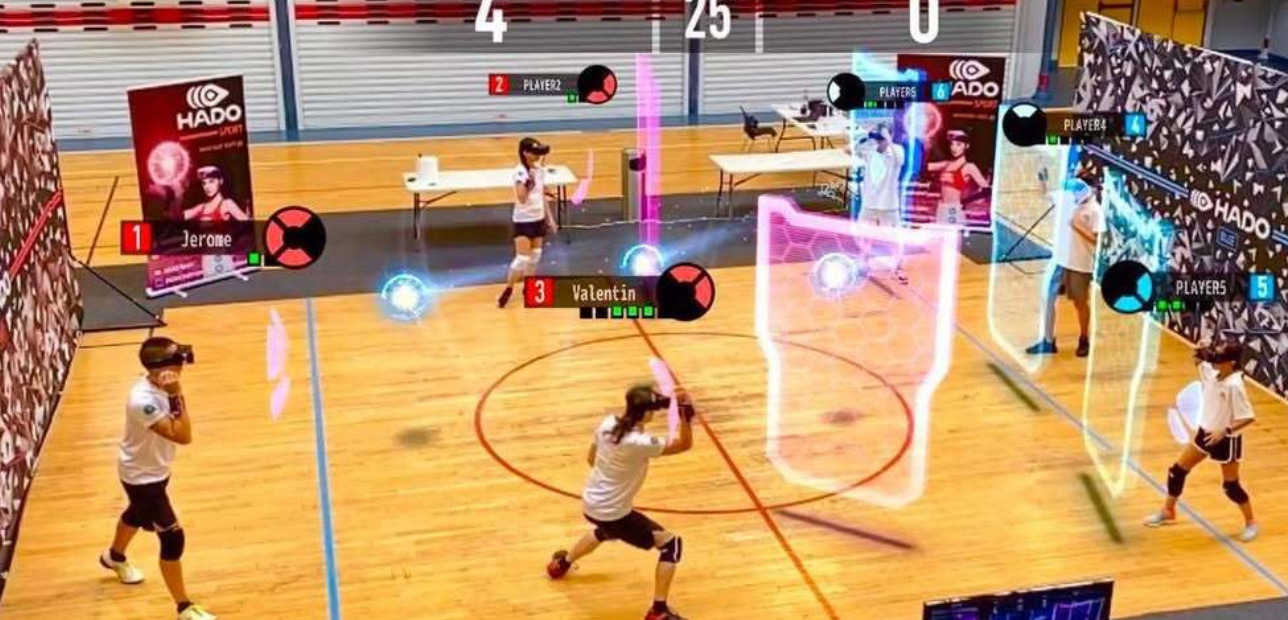
HADO is an AR sport that combines gaming, strategy, teamwork, and real physical movement.
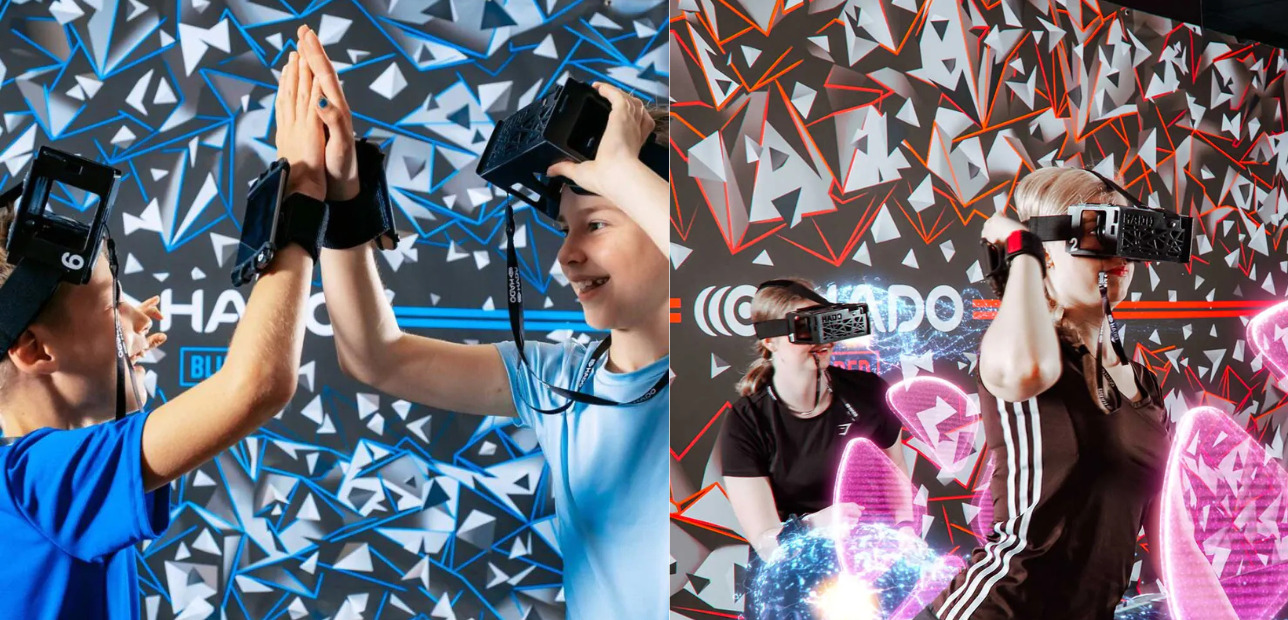
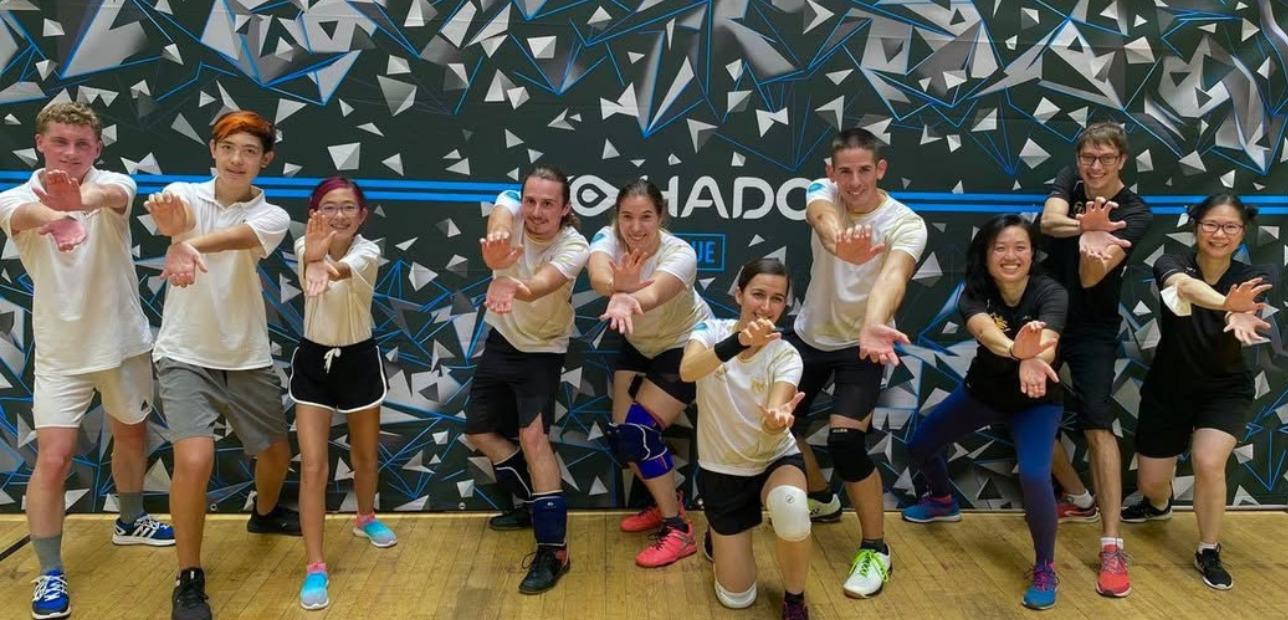
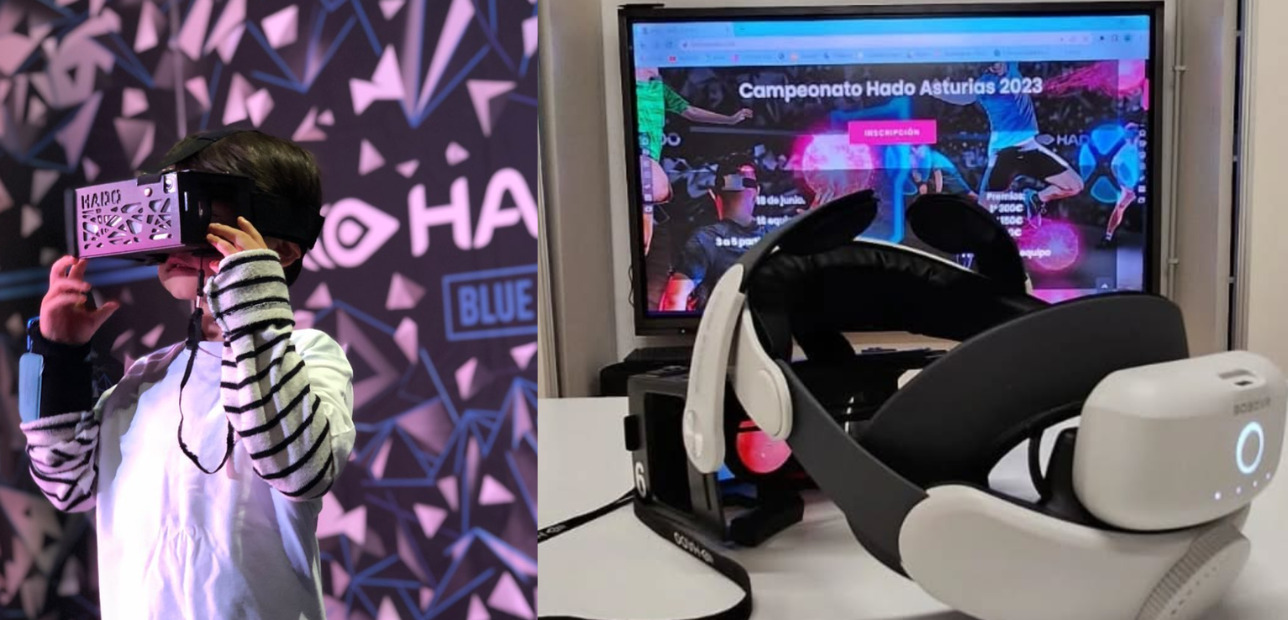
Players wear AR goggles and arm sensors. In a match, they move around the court, launch energy balls, activate shields, and work with teammates to score points against the opposing team.
HADO is designed to feel like stepping into a game world, but the players themselves are moving, aiming, dodging, and communicating in the real world.
An AR sport that combines gaming, strategy, and movement
HADO brings together elements of esports and physical sports.
Like esports, it uses digital technology, game mechanics, scores, attacks, shields, and strategy. Like sports, it requires movement, teamwork, positioning, and physical energy.
This combination makes HADO a strong option for operators who want to offer a kids’ esports program that feels new, active, and different from ordinary screen-based gaming.
How HADO works
In HADO, players compete in short, fast-paced matches. They use their arms to launch virtual energy balls and activate shields through AR technology.
Players must move around, avoid attacks, coordinate with teammates, and decide when to attack or defend.
The rules are easy to understand, which makes HADO accessible for beginners. At the same time, the game includes strategy, teamwork, and skill development, which makes it engaging over time.
Why HADO can fit children’s activity programs
HADO can fit children’s activity programs because it offers several advantages for operators.
- It combines digital excitement with physical movement.
- It is easy for beginners to understand.
- It encourages face-to-face teamwork.
- It can be used for classes, events, camps, and tournaments.
- It gives operators a clear point of difference from screen-based esports.
For businesses and organizations exploring youth esports, HADO can be positioned as an active esports format that appeals to both children and adults.
Traditional After-School Esports vs. HADO
Traditional screen-based esports and HADO can both provide value. However, they offer different experiences for children, parents, and operators.
| Program Type | Screen-Based Esports Program | HADO Active Esports Program |
|---|---|---|
| Main Activity | Playing PC or console games | Moving, dodging, aiming, and competing in AR |
| Physical Movement | Limited | High |
| Parent Concern | May increase screen time | Combines gaming with active movement |
| Teamwork | Often through voice chat or online coordination | Face-to-face teamwork and communication |
| Beginner Accessibility | Depends on game title and prior experience | Easy to understand through simple movement and scoring |
| Differentiation | Depends on game titles and coaching quality | Unique AR sport experience |
| Event Potential | Moderate | High, because it is easy to watch and experience |
How HADO Can Help Operators Differentiate Their Kids’ Esports Business
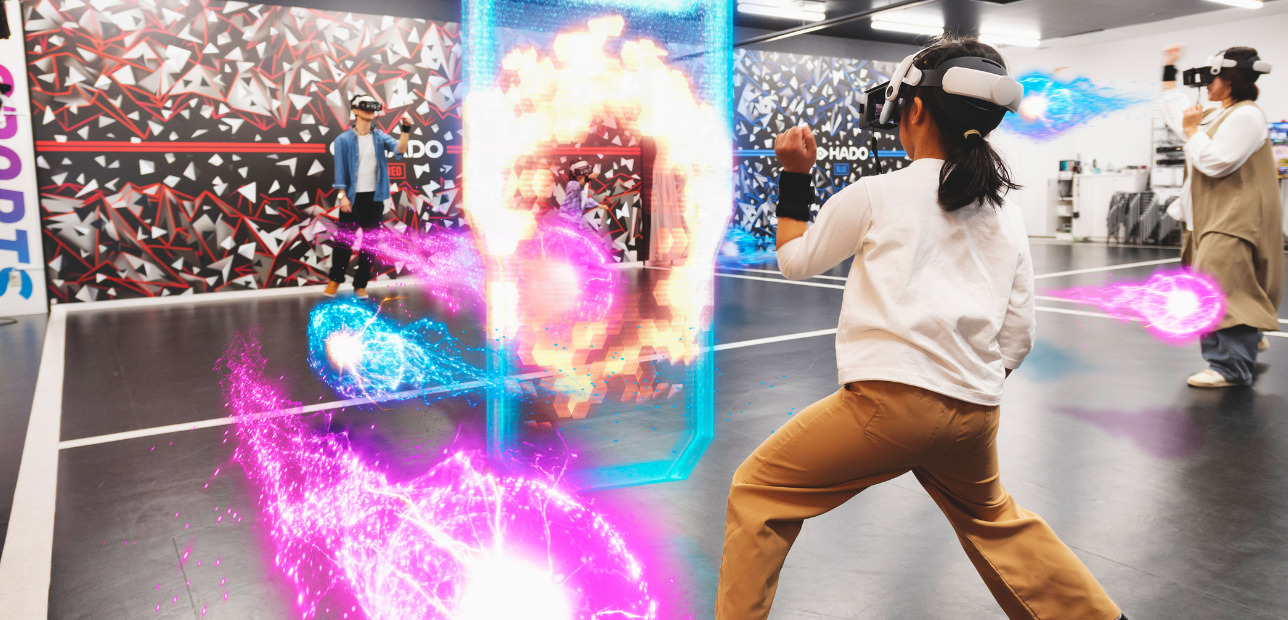
For operators, the challenge is not simply starting an esports program. The bigger challenge is creating a program that parents, schools, and communities can understand, trust, and choose.
HADO can help create that differentiation by offering an active esports experience that goes beyond traditional screen-based gaming.
A more active experience
HADO gives children a way to enjoy game-like competition while moving their bodies.
This can be especially valuable for operators who want to address parent concerns about screen time and inactivity.
A unique program beyond PC gaming
Many esports programs rely on the same well-known PC or console game titles.
HADO offers a different format. It is not simply another game on a screen. It is an AR sport that creates a new kind of esports experience.
Easy-to-understand gameplay for beginners
Some esports titles can be difficult for beginners to understand. They may require complex controls, long learning curves, or prior game knowledge.
HADO is easier to explain visually. Players move, attack, defend, and score points. This makes it easier for children, parents, and spectators to understand the experience quickly.
Strong appeal for events, trial sessions, and group activities
Because HADO is physical, visual, and team-based, it can work well beyond regular classes.
Operators can use it for trial sessions, open house events, holiday programs, tournaments, birthday parties, group activities, and promotional events.
This flexibility can be valuable for businesses that want both regular programs and event-based revenue opportunities.
A new category: active esports for kids
HADO can help operators position themselves in a new category: active esports for kids.
This category combines the appeal of gaming with the benefits of physical movement and face-to-face teamwork.
For organizations looking for a modern youth activity, this can be a strong message.
Looking for a More Active Esports Program for Kids?
If you are planning to launch an after-school esports program, youth activity business, or kids’ entertainment program, HADO can offer a different approach from traditional screen-based esports.
HADO combines AR technology, physical movement, teamwork, and competitive gameplay, creating an active esports experience that can appeal to children, parents, schools, and community partners.
For operators, HADO can be more than an activity. It can become a differentiated program, an event attraction, and a new way to introduce esports to children in a more active and social format.
To learn more about HADO and partnership opportunities, visit the official HADO website below.
Conclusion: The Next Step for After-School Esports May Be Active
After-school esports programs can be a powerful way to engage children through gaming, teamwork, strategy, and technology.
However, operators need to think beyond simply offering screen-based gameplay. Parents and schools may care about screen time, physical activity, safety, communication, and educational value. Businesses also need a way to stand out in a growing youth esports market.
Active esports offers a new direction. By combining digital gameplay with real movement, programs can become more physical, social, and event-friendly.
HADO is one example of this new direction. As an AR sport, it brings together gaming excitement, team strategy, and physical movement in a way that can help operators create a more differentiated esports program for kids.
For schools, youth organizations, activity providers, and entertainment businesses exploring the future of children’s esports, the next opportunity may not be just more screen time. It may be active esports.


EXPAND HADO
IN YOUR REGION
GET IN TOUCH

Proud supporter of the Tokyo 2025 Deaflympics.
A future sport for everyone to enjoy.