
Best Attractions for Family Entertainment Centers: How to Choose the Right Mix
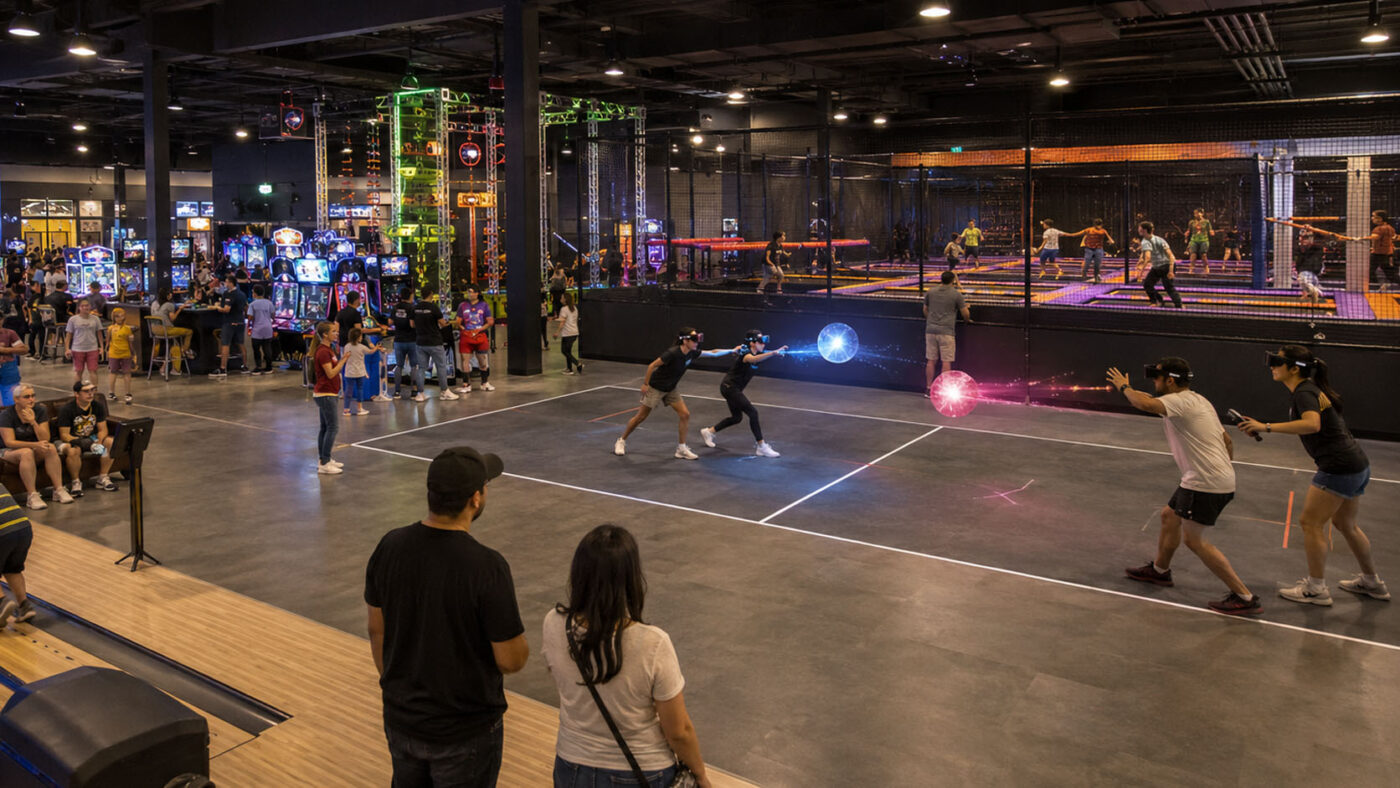
Learn how to choose the best attractions for family entertainment centers by building the right mix for families, groups, repeat visits, and event revenue.
Choosing the best attractions for a family entertainment center is not about picking the newest game. It is about building the right mix. A strong FEC needs different types of experiences. Some attract first-time visitors. Others keep families inside the venue longer. Certain attractions work well for birthday parties and school groups. Others create repeat visits through scores, competition, and events. Therefore, the best attractions are not chosen one by one. They are designed as a complete attraction mix. Today, operators can choose from arcade games, bowling, laser tag, trampoline parks, VR, mixed reality, interactive sports, and AR sports such as HADO. However, the real challenge is not finding options. The challenge is choosing what fits your audience, space, and business model.
What Makes an Attraction “Best” for a Family Entertainment Center?
It must help the venue grow
The best attraction is not always the newest one. It is also not always the largest or most expensive one. For an FEC, a good attraction must support the business. It should attract the right guests and fit the available space. Smooth operation also matters. In addition, the attraction should create revenue opportunities beyond one-time play.
Novelty is not enough
A VR attraction may look futuristic. Yet, it may serve only a few guests per hour. Heavy staff support can also become a problem. In that case, VR may not be right for every venue. By contrast, bowling may seem traditional. Still, it can become a strong social anchor when paired with food, music, parties, and group bookings.
Context decides the best choice
The right attraction for a small urban FEC may not fit a large destination venue. A mall-based venue needs attractions that are easy to see from outside. Meanwhile, a large active entertainment venue needs experiences that support longer stays. Before choosing an attraction, ask one simple question. Will this attraction help the venue grow? A strong attraction usually does one of four things. It brings in new guests, extends the visit, creates group revenue, or gives people a reason to return.
Why the Right Attraction Mix Matters More Than One Big Attraction
One attraction cannot serve everyone
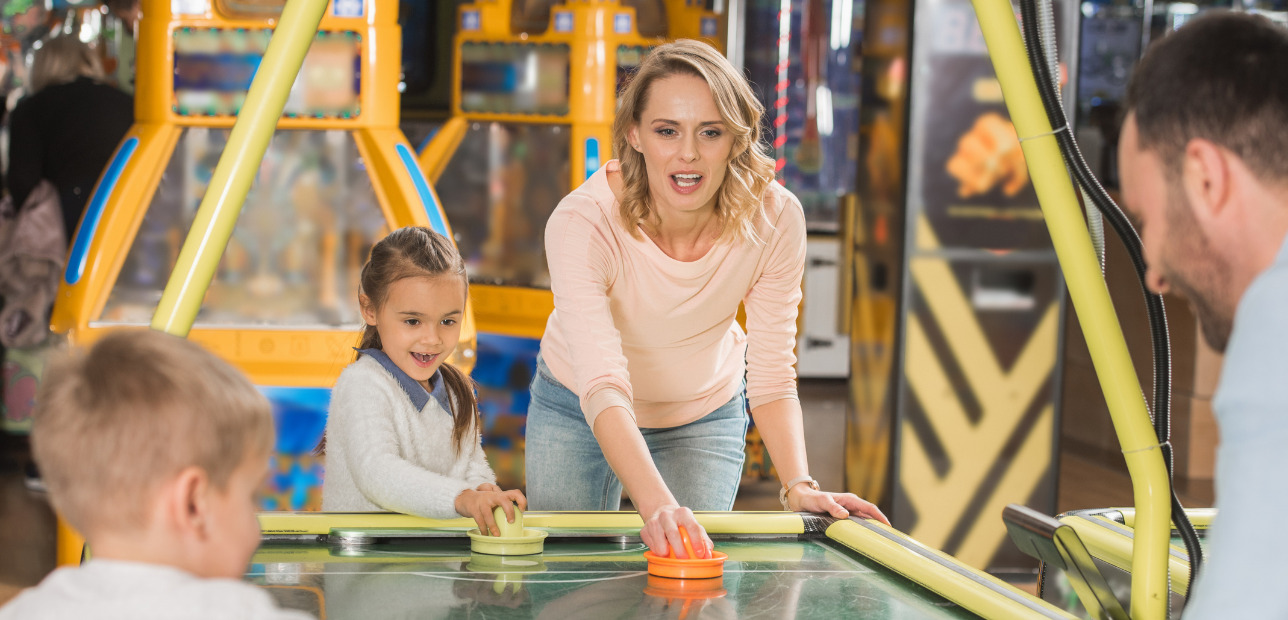
Many operators search for one “hero attraction.” A signature attraction can help. However, one attraction cannot meet every guest need. Young children need safe and simple activities. Older kids want challenge. Teens often want competition and social energy. Parents may want to play with their children, but they also need places to rest. Schools and companies need group activities. As a result, one attraction is rarely enough.
Each attraction should have a role
A good FEC works like an ecosystem. Some attractions create excitement. Others create steady revenue. Certain attractions fill waiting time. Others support birthday parties or group bookings. A venue becomes unbalanced when every attraction plays the same role.
Balance creates a better visit
A venue with only physical attractions may tire guests too quickly. A venue with only passive games may feel forgettable. Likewise, a venue with only novelty technology may attract first-time visitors but fail to bring them back. The best FECs let guests move naturally from one experience to another. A family might start with an active attraction. Then, they may eat, play arcade games, and join a team activity. Later, they may return for a birthday party. That is the goal: not a random collection of games, but a connected venue experience.
The Main Types of Attractions for Family Entertainment Centers
Arcade Games: The Flexible Revenue Driver
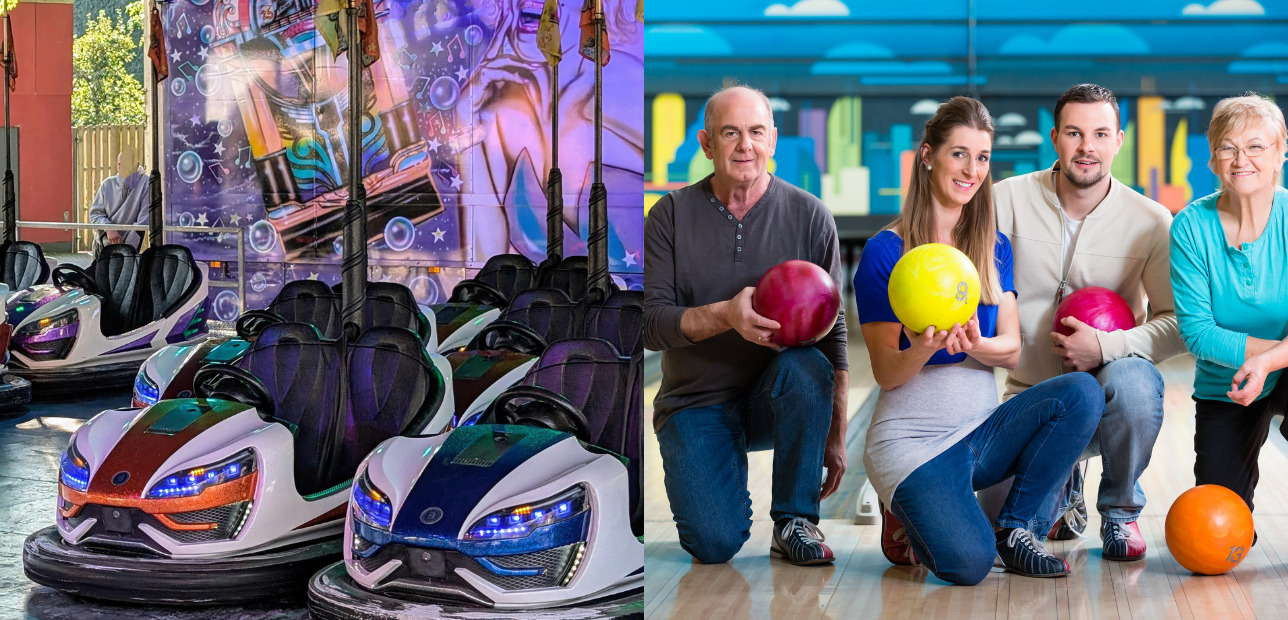
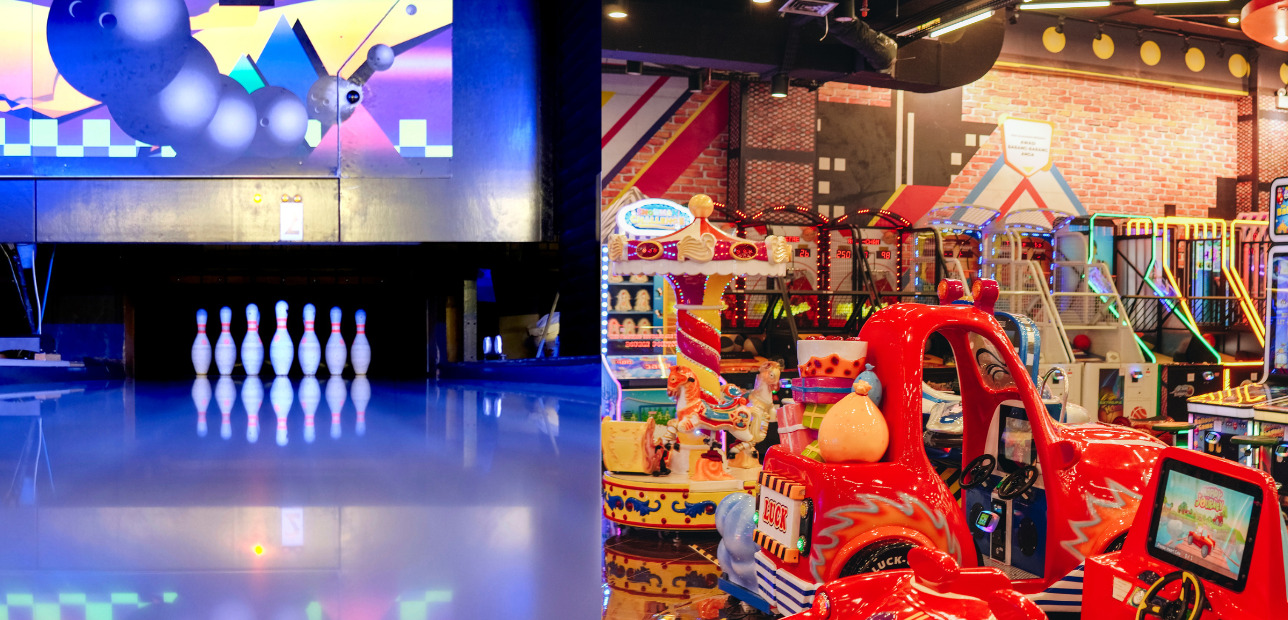
Arcade games remain common in FECs. They are flexible, familiar, and easy to use as add-on revenue. Guests can play while waiting for another attraction. They can also play after a main activity. Redemption games and prizes can increase engagement. This is especially true for children and families. Still, arcade games rarely create strong differentiation on their own. Most guests already know what an arcade is. As a result, arcades work best as a revenue layer. They need stronger social, physical, or signature attractions around them.
Bowling and Mini Bowling: The Social Anchor
Bowling may sound traditional. Yet, it still plays an important role in many entertainment venues. The reason is simple. Bowling is not only a sport. In a modern FEC, it can become a social experience. It works well with food, drinks, music, parties, and corporate events. Also, bowling is easy to understand. People with different skill levels can play together. The main challenge is space. Traditional bowling needs a large footprint. For smaller venues, mini bowling may be more realistic.
Laser Tag: Competitive and Group-Friendly
Laser tag is a classic competitive attraction. It combines movement, game rules, team play, and a clear win-or-lose structure. That makes it useful for birthdays, kids, teens, and group visits. Guests understand the idea quickly. The experience also creates excitement and conversation. However, laser tag needs a dedicated arena. It also needs equipment management and staff supervision. In some markets, it may feel familiar. Therefore, theme design and game modes matter.
Trampoline Parks and Ninja Courses: Active Physical Play
Trampoline parks and ninja courses are major parts of indoor active entertainment. The appeal is clear. Guests can jump, climb, balance, race, and challenge themselves. Children can burn energy. Families can spend time together. Groups can move through different activity zones. Modern trampoline venues often include more than trampolines. They may add dodgeball, foam pits, climbing walls, obstacle courses, and party rooms. The main strength is physical engagement. The activity is visible and easy to promote. However, safety is critical. These attractions need supervision, maintenance, age management, and clear guest flow.
VR Attractions: Immersive but Operationally Sensitive
VR can add novelty and immersion to an FEC. For guests, the promise is simple: step into another world. This can appeal to teens, gamers, and novelty seekers. Operators, however, need careful planning. Headsets must be cleaned. Guests often need instructions. Some people may feel motion sickness. Throughput can also be limited. This matters if the attraction serves only a few guests at a time. Another issue is visibility. People outside the headset may not understand what is happening. Therefore, VR should be judged by more than immersion. Operators should also consider hygiene, staff needs, throughput, and visibility.
Mixed Reality and Interactive Attractions: Physical Meets Digital
Mixed reality and interactive attractions bring digital content into physical spaces. This category includes interactive walls, projection rooms, sensor-based games, and digital sports walls. Guests move in a real space. Digital content responds to their actions. This format can be powerful. It combines physical activity with digital flexibility. For example, one room can change themes. It can become a sports game, a seasonal event, or a branded experience. However, content depth matters. A purely visual attraction may be tried once and forgotten. The best interactive attractions add goals, scores, challenges, and replay value.
AR Sports and Active Gaming: Competitive, Social, and Repeatable
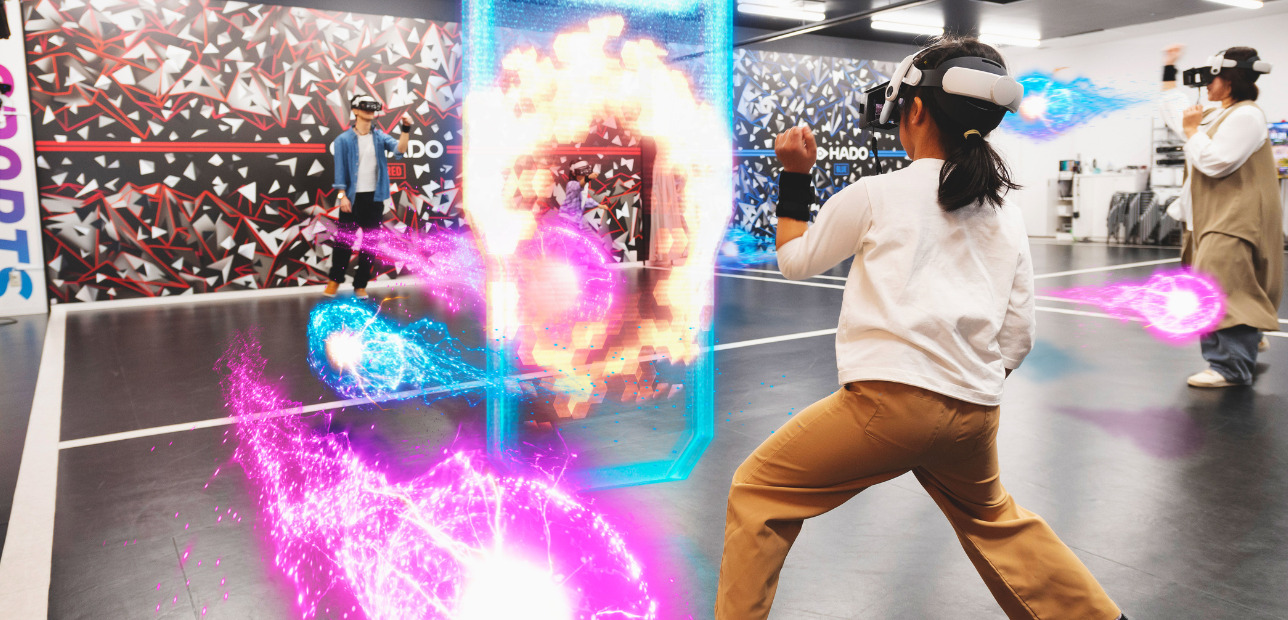
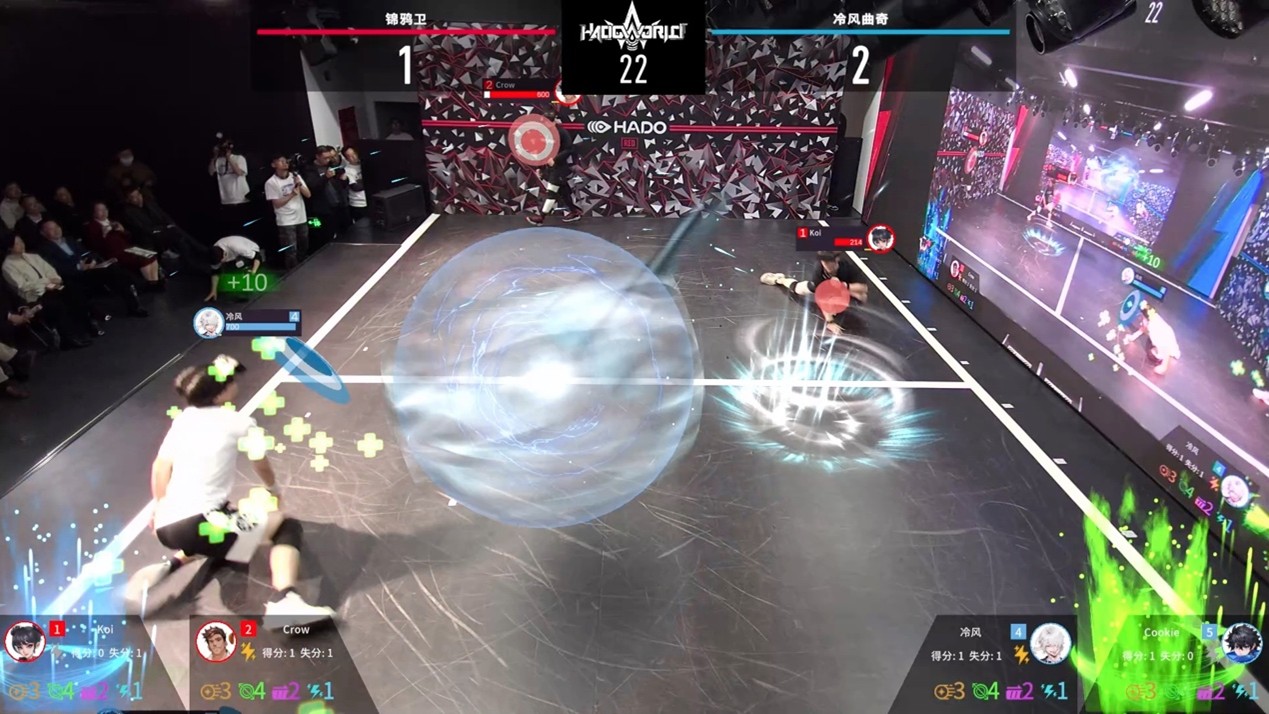
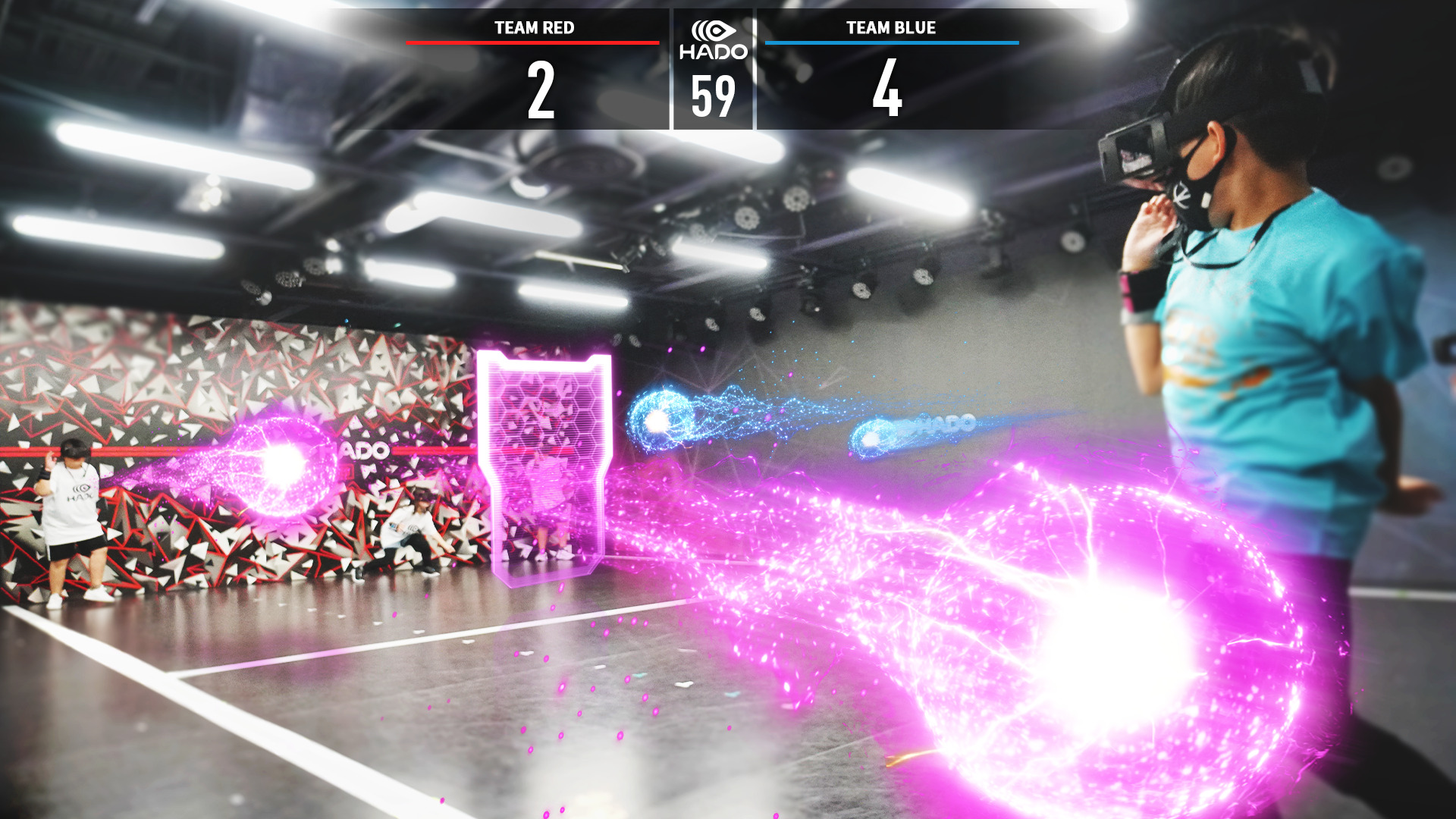
AR sports combine physical movement with game rules, scoring, competition, and digital effects. This category fits modern FECs well. It is more physical than an arcade game. It is also more visible and social than many VR experiences. At the same time, it is more game-like than traditional sports. HADO is an example of this category. In HADO, players wear AR headsets and armband sensors. They move on a real court and throw digital energy balls at the opposing team. The court is divided into two sides. Players face each other in a team-based match. The experience is simple to understand. Still, it has room for skill, strategy, and teamwork. For FECs, AR sports can support repeat play, group bookings, tournaments, school programs, and corporate events.
How to Match Attractions to Your Target Audience
Start with who you want to attract
The right attraction mix starts with the audience. A venue for young children should not choose attractions like a venue for teens. A corporate event venue also needs a different mix. Once the core audience is clear, decisions become easier.
| Audience | Strong Fit | Why It Works |
|---|---|---|
| Young children | Soft play, simple games, mini rides | Safe and easy to understand |
| Families | Bowling, mini golf, AR sports | Parents and kids can play together |
| Teens | Laser tag, VR, active gaming | Competitive, social, and shareable |
| Corporate groups | Team games, bowling, AR sports | Good for communication and teamwork |
| Schools and youth groups | Active games, educational tech, AR sports | Combines movement and group learning |
Look for cross-audience appeal
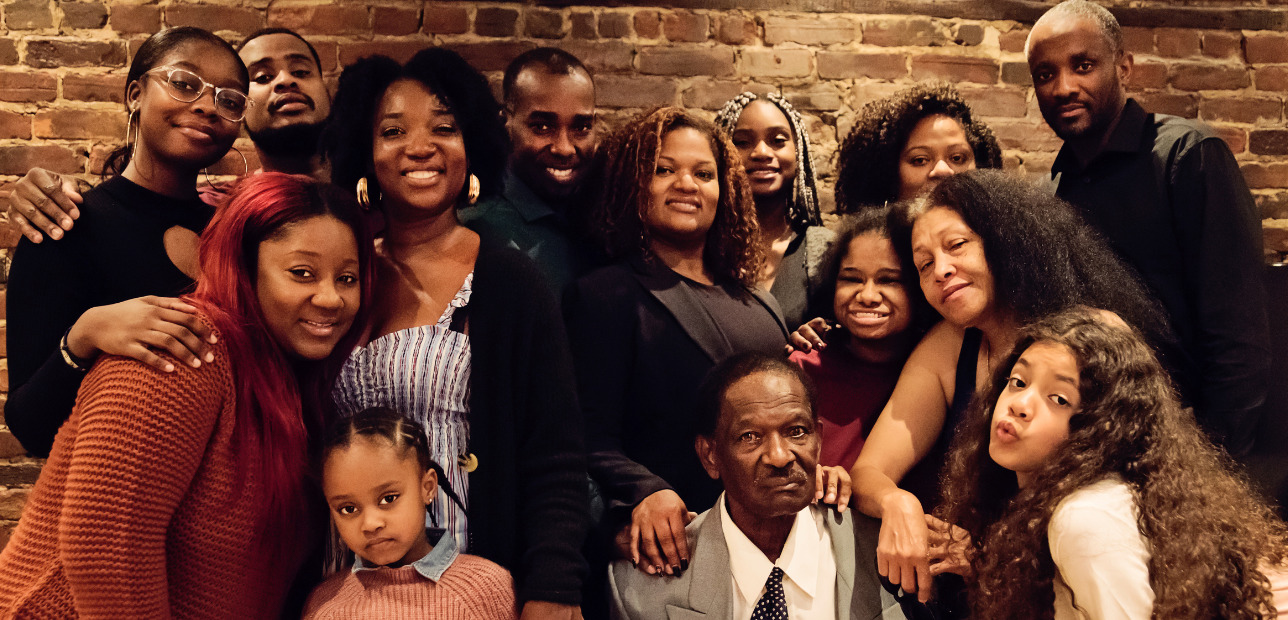
Some attractions serve one audience very well. Others can serve several audiences at once. Team-based active attractions can be useful here. For example, HADO can work for families, teens, birthdays, schools, and corporate groups. It combines movement, simple rules, teamwork, and competition. As a result, it can help improve utilization across different days, times, and booking types.
How to Choose Attractions Based on Business Goals
Connect each attraction to a clear goal
Attraction selection should always connect to a business goal. A venue focused on first-time visits needs something visible and promotable. Repeat visits require more than novelty. The attraction needs scores, progress, competition, community, or fresh content. Birthday revenue depends on experiences that are easy to package for groups.
| Business Goal | Attraction Direction |
|---|---|
| Bring in new visitors | Signature attractions, VR, AR, visible interactive play |
| Increase repeat visits | Scores, rankings, leagues, tournaments, skill-based play |
| Extend dwell time | Arcade, food and beverage, bowling, mini golf |
| Grow birthday parties | Laser tag, trampoline, bowling, team games |
| Add corporate revenue | Team-based attractions and tournament formats |
| Differentiate the venue | AR sports, mixed reality, unique active experiences |
Do not add attractions without a reason
A good attraction should not only entertain guests. It should solve a business problem. A venue with strong weekend family traffic may not need another children’s activity. Instead, it may need a group attraction that increases weekday bookings. Likewise, a mall-based venue may not need a large physical attraction. It may need something compact, visible, and easy to understand from the outside.

Comparison: Which Attraction Fits Your FEC?
Use the table as a starting point
Every attraction category has strengths and limits. The best choice depends on the role it needs to play inside the venue.
| Attraction | Best For | Watch Out For |
|---|---|---|
| Arcade games | Add-on revenue | Low differentiation |
| Bowling | Groups and parties | Requires space |
| Laser tag | Kids, teens, birthdays | Needs an arena |
| Trampoline | Active family play | Safety management |
| VR | Immersive novelty | Hygiene and throughput |
| Mixed reality | Interactive digital play | Content complexity |
| AR sports | Groups, events, repeat play | Needs clear explanation |
Think beyond the table
The table is only a starting point. For example, a venue may want something more physical than VR. It may also want something more game-like than traditional sports. In that case, AR sports can be a strong addition.
The Role of Active and Interactive Attractions in Modern FECs
Shared experiences are easier to remember
Modern FECs are moving beyond attractions that guests simply watch, sit in, or try once. Operators now need experiences that make guests move, compete, cooperate, and share the moment. This matters because group memories are powerful. Families laugh together. Friends compete. Classmates cheer. In each case, the attraction becomes more than an activity. It becomes a story.
Active attractions can create new revenue
Active and interactive attractions can support revenue beyond walk-in traffic. They can be used for birthday parties, school visits, corporate events, leagues, tournaments, and seasonal programs. This is why movement, digital feedback, group play, and repeatable challenge are becoming more important.
Where HADO fits
HADO fits this direction. It combines AR technology, physical movement, and team-based competition. Players move on a real court. They face the opposing team and throw energy balls through natural arm motions. The match is easy for spectators to understand. Also, the competitive structure makes it suitable for repeat play and events.
How to Build the Right Attraction Mix for Your Venue
Start with the audience
Building the right mix is not about copying another venue. It is about designing a mix that fits your audience, space, and revenue goals. A venue for young children needs a different mix from a venue for teens. For family-focused venues, include activities that parents and children can enjoy together. For teen-focused venues, competition and shareable moments matter more. For corporate events, team-based activities become important.
Balance energy levels
A good FEC should not feel like one long activity at the same intensity. Guests need variety. They may start with an active experience. Then, they may slow down with food and beverage. After that, they may play arcade games or join a group challenge. This balance helps the venue feel complete.
Add one or two signature attractions
A signature attraction gives people a reason to choose your venue. It should be easy to explain, easy to promote, and easy to remember. It could be a trampoline zone, a mixed reality arena, a themed laser tag space, or an AR sports attraction like HADO. The signature attraction does not need to be the largest part of the venue. It needs to be the clearest reason to visit.
Design for repeat visits
Repeat visits rarely happen by accident. They are created through scores, rankings, leagues, tournaments, new missions, memberships, and seasonal campaigns. Guests return when they feel they can improve, win, try again, or experience something new. That is why competitive and skill-based attractions can be powerful.
Plan for parties and group bookings
Birthday parties, school groups, and corporate events can become major revenue sources. Attractions that are easy to package are especially valuable. The best group attractions are simple to understand, fun to watch, and exciting for multiple people at once. Team-based attractions such as laser tag, bowling, and HADO can work well here.
Check operations before committing
An attraction may look impressive, but it must work in daily operation. Operators should consider throughput, staffing, safety, cleaning, maintenance, training, booking flow, and support. A difficult attraction may still be worth it. However, its revenue and brand value must justify the operational load. The best attraction is not only fun. It is fun and operable.
Example Attraction Mixes for Different Types of FECs
Small Urban FEC
A small urban FEC needs attractions that use space efficiently. Large trampoline areas or full bowling centers may not be realistic. Therefore, compact attractions with strong revenue potential become important.
| Role | Possible Attraction |
|---|---|
| Core revenue | Arcade games |
| Group play | Mini bowling or interactive sports |
| Signature attraction | AR sports or compact VR |
| Add-on revenue | Party room or food and beverage |
Mall-Based Family Entertainment Center
A mall-based FEC must attract people who did not plan to visit. Visibility matters. Guests should see the fun quickly. They should also understand the experience from outside the venue.
| Role | Possible Attraction |
|---|---|
| Impulse entry | Visible interactive attraction |
| Family play | Mini golf, arcade, AR sports |
| Kids area | Soft play |
| Group revenue | Birthday party packages |
Large Destination FEC
A large destination FEC needs variety. The venue itself becomes the destination. As a result, guests expect multiple experiences in one trip.
| Role | Possible Attraction |
|---|---|
| Anchor attraction | Bowling, trampoline, karting |
| Competitive play | Laser tag or AR sports |
| Add-on revenue | Arcade or redemption games |
| Event revenue | Private rooms and tournaments |
Active Entertainment Venue
An active entertainment venue is built around movement. The key is to combine physical play with game mechanics. Social competition and repeatable challenges also matter.
| Role | Possible Attraction |
|---|---|
| Physical play | Trampoline or ninja course |
| Competitive play | Laser tag or HADO |
| Digital layer | Interactive walls or AR games |
| Repeat system | Leagues, rankings, events |
Questions to Ask Before Adding a New Attraction
Ask what role it will play
Before adding a new attraction, do not ask only, “Is this exciting?” A better question is this: “What role will this attraction play in our business?” An attraction that attracts attention but does not create repeat visits may work best as a promotional feature. A group-friendly attraction with a huge footprint may not fit a small venue. A highly physical attraction requires strong safety management. Technology-driven attractions also need staff training and support.
Look for attractions that solve several needs
The strongest attraction choices answer several business needs at once. They fit the target audience. They support group play. They create repeat reasons. They also work inside the available space and complement the existing mix. When an attraction supports parties, school programs, corporate events, leagues, or tournaments, it becomes more than a play option. It becomes a revenue platform.
Where AR Sports Fit in the FEC Attraction Mix
AR sports can play several roles at once
AR sports can be valuable for modern FECs because they combine several qualities operators often want. They are active because players move in a real space. They are social because players compete in teams. Digital effects make the experience feel new. In addition, the format can be repeatable. Players can improve, compete again, form teams, and join events.
HADO as an example
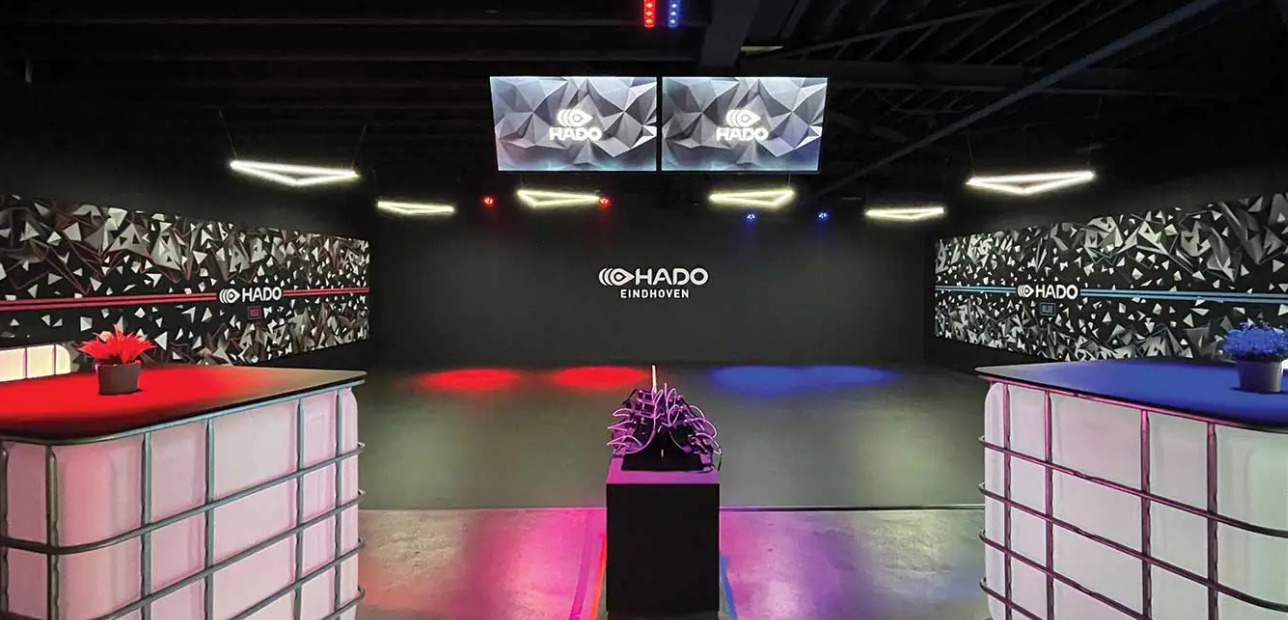
HADO brings these elements together in one attraction. Unlike VR attractions, HADO is played on a real court. Players face the opposing team. They throw AR energy balls using natural arm motions. The result feels both physical and game-like. For FEC operators, HADO can serve several roles at once. It can be a signature attraction, a group attraction, an event attraction, and a repeatable attraction.
| Role in FEC | How AR Sports Help |
|---|---|
| Signature attraction | Creates a clear reason to visit |
| Group attraction | Families and friends can play together |
| Active attraction | Adds physical movement to the venue |
| Event attraction | Works for parties, schools, and companies |
| Repeatable attraction | Supports improvement, teams, and tournaments |
For venues looking for an attraction that is more physical than VR and more digital than traditional sports, AR sports can be a strong part of the mix.
Conclusion: The Best FEC Attractions Work Together
The mix matters most
The best attractions for family entertainment centers do not work in isolation. Arcade games can support add-on revenue. Bowling can anchor social visits. Laser tag can create group competition. Trampoline parks can deliver active play. VR can add immersion. Mixed reality can make spaces interactive. AR sports can combine movement, digital gameplay, team competition, and repeatable events.
Choose the combination that makes the venue stronger
The right question is not, “Which attraction is best?” The better question is, “Which combination will make this venue stronger?” A successful FEC attraction mix should bring in new guests, serve the right audiences, create shared moments, support group bookings, and give people reasons to return. When attractions work together, the venue becomes more than a collection of games. It becomes a destination.
Consider HADO for active, repeatable group play
For operators looking for an active, competitive, and repeatable attraction, HADO can be a strong addition to the mix. By combining AR technology, physical movement, and team-based gameplay, HADO helps venues create memorable experiences. It can support families, groups, schools, and corporate events.
Learn more about HADO for family entertainment centers and business use
EXPAND HADO
IN YOUR REGION
GET IN TOUCH

Proud supporter of the Tokyo 2025 Deaflympics.
A future sport for everyone to enjoy.