
The Future of Sports: How Technology, Esports, and New Experiences Are Changing the Game
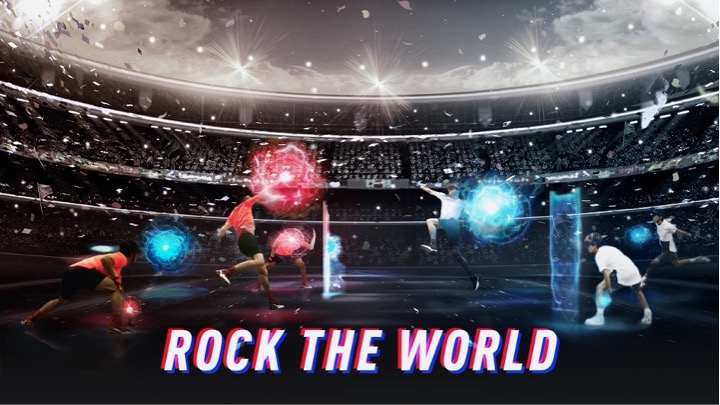
Sport is evolving beyond competition into a global, technology-driven experience—and this is the story of where it’s headed and why we’re building HADO to be part of that future.
We are working to bring a new sport called HADO to the world.
You might wonder—what does it even mean to “create” a sport?
It may sound unusual, but it’s actually incredibly exciting.
In this article, I want to explore the future of sport—where it stands today, how it’s evolving, and what new possibilities lie ahead.
The Power of Sport: Drama That Moves People
Sport gives people strength.
At its core, sport is filled with drama—stories that move us deeply.
When people are caught up in the moment, even strangers embrace each other, celebrating together.
They can’t wait for the next game.
Sport is more than competition.
It’s battles between regions, nations, and even companies.
Fans pour their emotions into teams.
Energy builds. Passion spreads.
Athletes dedicate decades of their lives to a single discipline, reaching levels of performance most people can’t even imagine.
And in competition, there is a palpable tension—as if everything is on the line.
That intensity is felt not only by the players, but by everyone watching.
Sport is a source of power.
It has the ability to inspire the entire world.
Even those who feel lost in their daily lives—those who struggle to find hope—can rediscover dreams through sport.
That’s what I believe.
And through HADO, I want to bring that energy and inspiration to people all over the world.
The Global Sports Industry Is Expanding
The global sports industry continues to grow.
Today, it is estimated to be worth over $1–1.5 trillion USD when including all related sectors.
But what matters most is not just growth.
What’s truly happening is this:
The definition of sport itself is expanding.
Beyond traditional competition, we now see the rise of:
- Esports
- Fitness and wellness
- XR / AR sports
- Experience-based entertainment
These fields are merging.
Sport is no longer just competition—it is becoming a comprehensive experience industry.
A Few Sports Dominate the Market
The sports industry remains heavily concentrated around a small number of major sports.
Soccer, basketball, and baseball have built massive ecosystems over decades—deeply rooted in culture and education, supported by huge player bases, audiences, and sponsors.
As a result, money and attention tend to concentrate around these established sports.
This structure is consistent worldwide.
In the U.S., American football and basketball dominate.
In Europe, soccer stands far above the rest.
The market revolves around already-established sports.
In many ways, it mirrors capitalism itself.
For new sports, this is both a challenge and an opportunity.
Rather than competing on the same playing field, the key is to offer something fundamentally different—new value, new experiences.
The real question becomes:
Can you create something that has never existed before?
Watching Sports Is Becoming an Interactive Experience
The way we watch sports is also evolving.
Today’s viewing experience includes:
- Multi-angle video
- Real-time data overlays
- Social media interaction
- Personal live commentary and streaming
Watching is no longer passive—it is interactive.
Athletes, too, are beginning to shift.
It is no longer enough to simply perform.
They must also think about how to build a fan base and connect with audiences.
Sport is becoming not only competition, but communication.
Tech Sports: The Next Frontier
Unlike traditional sports built around balls and rackets, HADO is powered by augmented reality and motion-tracking technology.
We call this new category “Tech Sports.”
Just as the industrial revolution gave birth to automobiles—and eventually motorsports—
today’s information age is creating entirely new forms of sport.
We believe a new sports market is emerging from this technological foundation.
We call it Tech Sports.
And HADO is one of the first examples.
Looking ahead, we expect to see new competitions involving drones, robots, and other advanced technologies.
If even one of these grows to the scale of soccer, it becomes a massive global industry.
Whether that happens depends on how technology evolves—but we believe the potential is real.
Technology Will Bring Sport Closer to Everyone
So what changes when technology enters sport?
Of course, there’s the excitement of being able to perform moves we once only imagined as kids.
But beyond that, the societal impact is much bigger.
1. Anyone Can Participate
Technology allows us to adjust difficulty and design experiences.
This makes it possible to reduce the gap between beginners and experts.
As a result, people of all ages and skill levels can enjoy sport.
2. Anytime, Anywhere
Sport is no longer tied to specific locations.
What once required dedicated facilities can now happen in everyday spaces—parks, offices, classrooms, even train stations.
Sport shifts from something you “go out to do”
to something that becomes part of daily life.
3. Connecting the World
By bringing sport online, people across the world can compete and connect.
International matches and leagues can become part of everyday life.
Sport evolves from competition into a platform for human connection—
creating entirely new kinds of communities.
Final Thoughts
There are many people in the world who feel they have no dreams, no hope.
People who don’t know what they’re living for.
People who can’t see a future worth believing in.
That’s not a world we should accept.
We want to change that.
That’s why we believe in sport.
Through sport, we can inspire people.
We can create athletes others look up to—true heroes.
We can build something that makes people think:
“I want to be like that.”
We can create a sport that makes people excited for the next match, the next moment.
That is what sport can do.
Sport gives people the strength to live.
Let’s bring that power to the world.
EXPAND HADO
IN YOUR REGION
REACH OUT
Proud supporter of the Tokyo 2025 Deaflympics.
A future sport for everyone to enjoy.