
VR Attractions for Entertainment Venues: Benefits, Business Models, and Alternatives
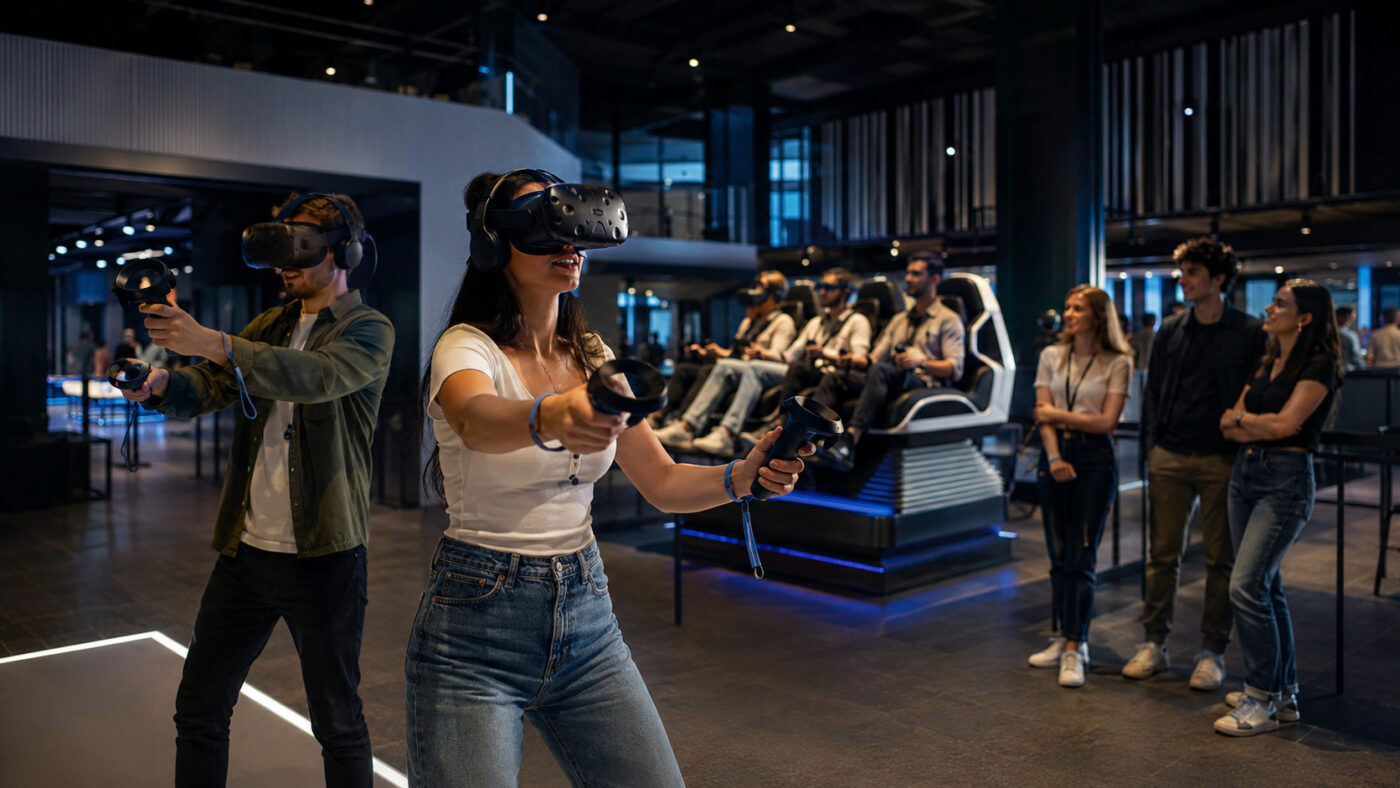
Explore VR attractions for entertainment venues, including key types, business models, and alternatives such as AR sports and active gaming.
VR attractions are a strong option for entertainment venues looking to add new, immersive experiences. They can make guests feel as if they are entering another world. With headsets, motion seats, controllers, sensors, sound, and visual effects, VR can create experiences that are difficult to recreate at home.
For this reason, VR is often considered by amusement venues, family entertainment centers, shopping malls, tourist destinations, hotels, resorts, sports facilities, and location-based entertainment operators.
However, venue operators should not choose VR only because it looks futuristic. The real question is whether the attraction works as a business. How many guests can experience it per hour? How much staff support is needed? Is cleaning and equipment management realistic? Can groups enjoy it together? Does it create repeat visits? Does it fit the venue’s existing attraction mix?
This article explains the main types of VR attractions, the benefits of adding VR, key points to check before investing, business models, and alternatives such as AR sports and active gaming attractions like HADO.
What Are VR Attractions for Entertainment Venues?
VR attractions are location-based entertainment experiences where guests use VR headsets and other equipment to enter an immersive digital environment.
Depending on the format, guests may use controllers, motion seats, blasters, sensors, haptic devices, or free-roam tracking systems.
The important difference between home VR and venue-based VR is the business model.
Home VR is a personal experience. Venue-based VR is a paid attraction. It must be designed around guest flow, pricing, staff operation, group use, safety, maintenance, and repeatability.
This is especially important for entertainment venues. A VR attraction is not just a piece of technology. It becomes part of the venue’s revenue model.
There are many types of VR attractions. Some are compact and easy to add to an existing venue. Others require dedicated space and higher investment. Some are designed for short sessions.
Others are premium experiences built around longer play, group missions, or IP-based storytelling. Because of this, venue operators should not only ask, “Should we add VR?” A better question is, “Which type of VR attraction fits our venue, audience, space, and business goals?”
Why Venue Operators Consider VR Attractions
VR creates novelty and visual impact
The biggest strength of VR is its ability to create a strong first impression.
Guests wear a headset and enter a digital world. That alone can make the attraction feel different from traditional arcade games, sports activities, or ride-based attractions.
For young adults, gamers, tourists, and groups looking for something new, VR can become a reason to visit.
A venue can promote VR as an experience that guests cannot easily try at home. This is useful for attracting first-time visitors and creating a sense of modernity.
VR can support premium pricing
VR attractions can often be positioned as premium experiences.
A simple arcade game may be priced at a lower level. By contrast, VR can justify a higher price when it includes immersive visuals, motion effects, multiplayer gameplay, or story-based content.
Free-roam VR, IP-based VR, and story-driven VR experiences can feel less like a standard game and more like a special event.
For venue operators, this can create an additional high-value revenue stream.
VR can be added to existing venues
VR does not always require a completely new facility.
Some formats can be added to amusement venues, arcades, shopping malls, hotels, resorts, sports facilities, or tourist destinations as an additional attraction.
For example, guests can try VR while waiting for another activity. A venue can add VR as a premium add-on. A resort can use VR as an indoor activity. A corporate event venue can include VR as part of a group program.
This flexibility is one reason many operators consider VR.
VR offers a wide range of content
VR can support many different themes.
Racing, flying, shooting, horror, space travel, underwater exploration, sports, fantasy, education, and IP-based content can all be delivered through VR.
This variety allows operators to match the content to their target audience.
However, content selection matters. A horror VR attraction may work well for young adults but may not fit a venue focused on tourists or mixed-age groups. A fast-motion experience may look exciting but may not suit guests who are sensitive to motion sickness.
The attraction must fit the people the venue wants to attract.
Main Types of VR Attractions and Adjacent Immersive Experiences

VR Arcade Machines
VR arcade machines are one of the most compact and accessible types of VR attractions.
Guests wear a headset and experience a short game, ride, shooter, racing experience, or simulation.
The main advantage is that they can often be added to existing spaces. They can fit into arcades, mall entertainment areas, amusement venues, tourist facilities, or other high-traffic locations.
Short experience times can also help improve guest turnover.
However, because the experience is usually short, operators need to think carefully about repeat value. Scores, rankings, multiple content options, friend comparisons, and seasonal campaigns can help prevent the attraction from becoming a one-time novelty.
Seated Motion Simulators
Seated motion simulators combine VR visuals with movement, vibration, wind, sound, and other effects.
They are well suited for experiences such as roller coasters, flight, racing, space travel, or underwater exploration.
This format is easy for guests to understand. They sit down, wear the headset, and experience the ride.
Because guests do not need to walk or move around, seated simulators can be easier for first-time users than more physically demanding VR formats.
They can work in amusement venues, shopping malls, tourist attractions, hotels, resorts, and entertainment facilities.
The challenge is content freshness. If guests experience the same ride once, they may not feel a strong reason to return. Multiple content options and seasonal updates can help.
Multiplayer VR
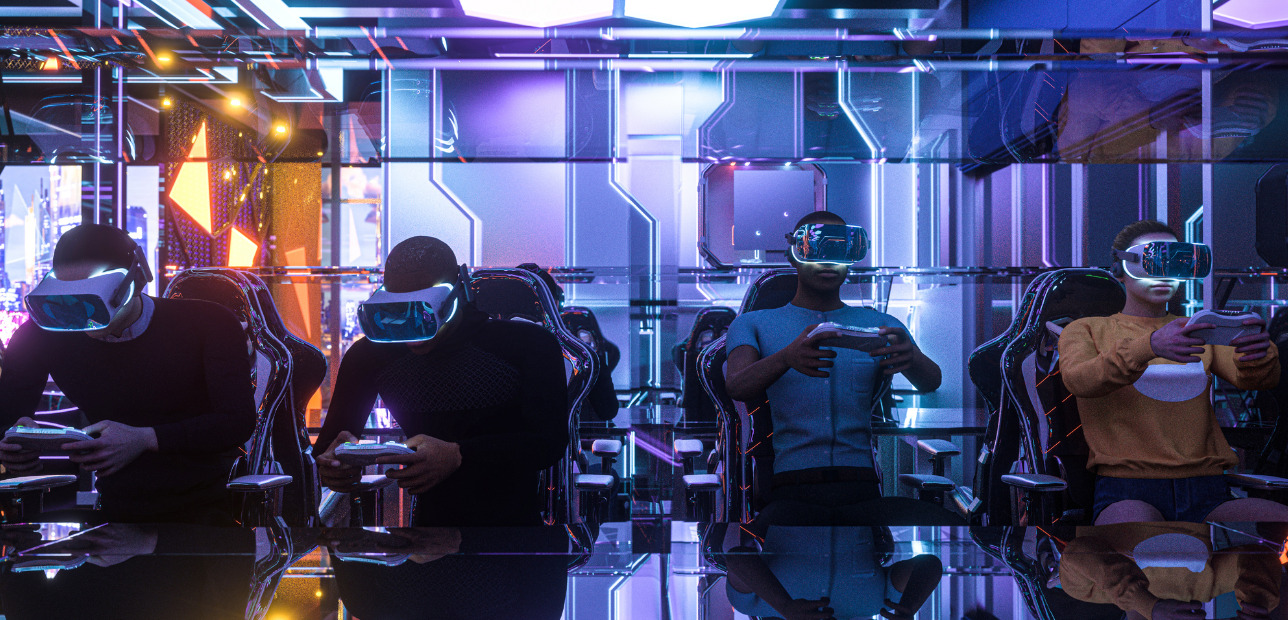
Multiplayer VR allows several guests to enter the same virtual space at the same time.
They may cooperate, compete, complete missions, solve puzzles, or fight enemies together.
This format is stronger for group use than single-player VR. Friends, couples, tourists, colleagues, and event groups can experience it together.
For venue operators, multiplayer VR can support group bookings, private events, and corporate programs.
However, the operation can become more complex. Multiple headsets must be fitted and synced. Staff may need to explain the rules to several people at once. Technical issues can affect the whole group.
Before investing, operators should check setup time, staff requirements, guest turnover, and troubleshooting flow.
Free-Roam VR Arenas
Free-roam VR allows guests to walk through a dedicated physical space while experiencing a virtual world.
This format can offer a strong sense of immersion. Guests may move with teammates, explore environments, complete missions, or fight enemies in a shared virtual space.
Free-roam VR can work as a premium attraction. It can become a signature experience for a venue rather than a small add-on.
However, it usually requires more space, more equipment, more staff, and more safety planning.
For this reason, free-roam VR should be considered carefully. It is often better suited to venues that want a high-value anchor attraction rather than a compact side attraction.
VR Escape Rooms and Story-Based VR
VR escape rooms and story-based VR attractions focus on missions, puzzles, and narrative experiences.
Guests enter a virtual world and work together to solve challenges or complete a story.
This format can be valuable because it creates conversation and cooperation. It can work well for groups, tourists, corporate events, and adult social entertainment.
The challenge is repeatability.
Once guests solve a puzzle or complete a story, they may not want to repeat the same experience. Operators should consider multiple scenarios, difficulty levels, seasonal content, or new story updates.
IP-Based VR Attractions
IP-based VR uses movies, anime, games, characters, or brand worlds as the foundation of the attraction.
The appeal is clear. If guests already love the IP, entering that world can become a powerful reason to visit.
This format can work well in shopping malls, tourist destinations, pop-up venues, promotional events, and media campaigns.
However, IP-based VR requires careful business planning.
Licensing costs, contract terms, campaign periods, merchandise, promotion, and content updates all matter.
IP can create strong initial demand. Yet, for long-term operation, the experience still needs repeat value and a clear revenue model.
AR Sports and Active AR Attractions
AR sports are not VR attractions, but they are an important adjacent category that venue operators should compare with VR.
VR places guests inside a virtual world. AR sports use digital elements inside a real physical space.
HADO is an example of this category.
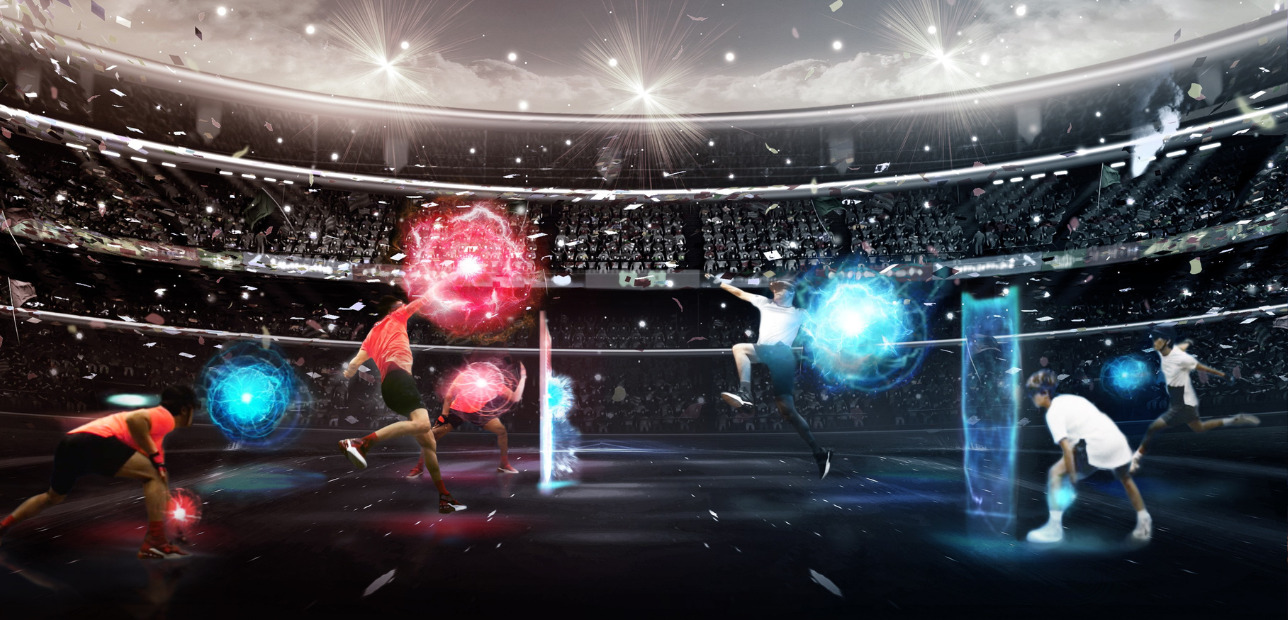
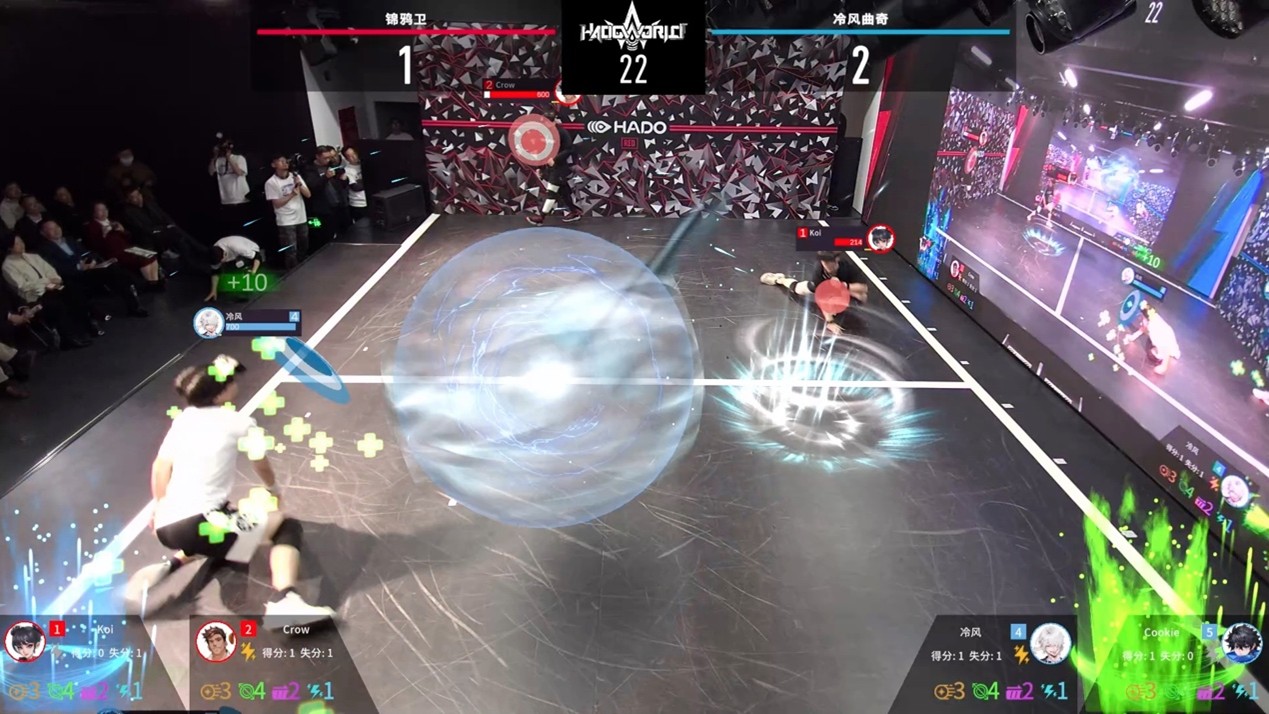
In HADO, players wear a headset and an arm sensor. They move on a real court, face the opposing team, and throw AR energy balls through natural arm motions. The experience is physical, digital, competitive, and social.

One major advantage of AR sports is visibility. In VR, the most exciting part of the experience can be hidden inside the headset. People nearby may not fully understand what the player is seeing.
With AR sports such as HADO, spectators can see players moving, aiming, dodging, reacting, and competing. The energy of the game is easier to understand from the outside. AR sports can also support repeat play. Scores, team strategy, improvement, rankings, tournaments, and events can all create reasons for guests to return.
For venues considering VR, AR sports can be an alternative or a complement. VR can provide immersion. AR sports can add physical activity, group competition, spectator appeal, and event potential.
What to Check Before Investing in VR Attractions

Visibility: can people see the fun?
VR can be immersive for the player, but it can be difficult for others to understand from the outside.
This matters in entertainment venues.
Guests often decide what to try by watching other people. If the attraction is hidden in the back of the venue, or if the gameplay is invisible, it may lose some of its promotional power.
Operators should think about placement, external monitors, guest movement, lighting, and spectator visibility.
A VR attraction should not only be fun inside the headset. It should also look interesting to people nearby.
Throughput: how many guests can experience it per hour?
For venue operators, throughput directly affects revenue.
The play time alone is not enough. The full cycle includes reception, explanation, headset fitting, gameplay, exit, cleaning, and reset time.
A five-minute game may take ten minutes per guest cycle if setup and cleaning take too long.
Before investing, operators should calculate how many guests can experience the attraction per hour during peak times.
Long wait times can reduce guest satisfaction. Low throughput can limit revenue, even when the attraction is popular.
Staffing: can the venue operate it smoothly?
VR attractions often require staff support.
Guests may need help wearing the headset, holding controllers, understanding the rules, starting the game, and exiting safely.
Staff may also need to clean equipment and respond to technical issues.
A good VR attraction should be easy for the operations team to manage.
Operators should check whether part-time staff can run it safely, whether the instructions are simple, and whether technical support is available when problems occur.
Hygiene and equipment management
VR headsets touch the face. Controllers and other devices are shared by many guests.
For this reason, hygiene management is essential.
Cleaning must be fast enough to avoid hurting throughput. At the same time, it must be thorough enough to give guests confidence.
Operators should check cleaning methods, replacement parts, face covers, storage, charging, battery management, and daily maintenance routines.
A VR attraction that looks good on paper can become difficult to operate if equipment management is too heavy.
Motion sickness and accessibility
Some guests may experience motion sickness in VR.
This depends on the content, movement style, frame rate, experience length, and each guest’s sensitivity.
Accessibility also matters.
First-time users, glasses users, older guests, and people who are uncomfortable with headsets may need extra support.
Operators should understand who the attraction is best suited for.
A strong attraction does not need to serve everyone. However, the venue should know clearly which audience it is designed for.
Group play and social value
Many entertainment venues depend on groups.
Friends, couples, tourists, colleagues, event participants, and teams often visit together.
For this reason, operators should check whether the VR attraction creates shared moments.
Can multiple people play together? Can others watch? Can guests talk about the experience afterward? Can it be used for group bookings or events?
A VR attraction with strong group value can become more than a single-player experience. It can become part of the venue’s event business.
Repeatability and content updates
VR can create a strong first impression. However, the first impression is not enough for a sustainable attraction.
Guests need a reason to come back.
Scores, rankings, levels, multiple content options, multiplayer modes, seasonal events, and tournaments can all support repeat visits.
Operators should ask how often the content can be refreshed. They should also check whether the attraction can support campaigns, events, or new game modes.
Without repeatability, VR may become a one-time novelty.
Business Models for VR Attractions in Entertainment Venues
Pay-per-play
Pay-per-play is the simplest model.
Guests pay each time they use the attraction. This works well for VR arcade machines and short-format VR experiences.
It can fit arcades, shopping malls, tourist facilities, and amusement venues.
The model is easy to understand. However, visibility and short cycle times are important. Guests need to notice the attraction and decide quickly.
Premium add-on
VR can also work as a premium add-on to an existing venue experience.
A bowling venue, sports facility, amusement venue, or tourist destination can sell VR as an additional activity.
This model works well when guests are already on-site. The attraction increases spend per visit without requiring a completely separate destination strategy.
Packages can also include VR as an upgrade.
Time-based packages
Time-based packages charge guests for a set period, such as 60 or 90 minutes.
This model can work well for VR parks or venues with multiple VR experiences.
Guests can try several types of content during one visit. Operators can also design pricing around length of stay.
However, this model requires careful guest flow management. Popular attractions can create bottlenecks if capacity is not planned well.
Group bookings
VR can support group bookings when the format is social enough.
Multiplayer VR, VR escape rooms, and team-based VR experiences can work for corporate groups, tourists, and private events.
This model can help venues create revenue beyond walk-in traffic.
However, the experience must be easy to explain and reliable to operate for groups.
IP and seasonal campaigns
VR is compatible with IP and seasonal campaigns.
Films, games, anime, characters, Halloween, summer campaigns, and holiday events can all become reasons to promote VR.
This model can create urgency and media attention.
However, operators must consider licensing, campaign length, content updates, and what happens after the campaign ends.
Alternatives and Complements to VR Attractions
Mixed Reality Attractions
Mixed reality attractions combine real physical space with digital effects.
Unlike full VR, guests do not always enter a completely virtual world. Instead, the real venue becomes part of the experience.
Depending on the system, mixed reality may use screens, sensors, cameras, projection, or headsets.
This format can be useful when operators want guests to move in a shared physical space while still enjoying digital feedback.
Projection-Mapped Interactive Rooms
Projection-mapped interactive rooms use floors, walls, sensors, and visual effects to create responsive environments.
Guests can step, touch, throw, move, or interact with projected content.
This format can work well for tourist venues, museums, shopping malls, event spaces, and urban entertainment venues.
Because no headset is required, the experience can be easy to understand and accessible to a wide range of guests.
However, repeatability still matters. Scores, missions, seasonal themes, and difficulty changes can help keep the attraction fresh.
Interactive Sports Attractions
Interactive sports attractions add digital layers to physical activities.
Basketball, soccer, climbing, trampolines, reaction games, and fitness spaces can all be enhanced with scores, rankings, digital targets, or time challenges.
This type of attraction combines physical activity with the motivation of a game.
It can work especially well for venues that already have sports or active entertainment components.
By adding digital goals, operators can create more reasons for guests to try again.
AR Sports Attractions such as HADO
AR sports attractions such as HADO offer a different value from VR.
VR focuses on entering a virtual world. HADO focuses on moving in a real court while using AR elements for team competition.
Players face the opposing team and throw AR energy balls through physical movement.
This makes the experience visible, active, and social.
People nearby can understand the action more easily than many headset-only VR experiences.
HADO can also support repeat play through teams, scores, strategy, improvement, rankings, and tournaments.
For venue operators, HADO can be used as an alternative to VR or as a complement.
A venue can use VR for immersion, while using HADO to add physical activity, competition, spectator appeal, and event potential.
How to Decide Between VR, AR Sports, and Interactive Sports

VR is a good fit when immersion is the priority
VR is best suited for venues that want to maximize immersion.
It works well for virtual worlds, story-based content, IP experiences, premium attractions, and guests who actively want to enter a digital environment.
It can be a strong option for young adults, tourists, gamers, and technology-driven audiences.
However, the venue must be ready to manage staff support, hygiene, equipment, and throughput.
AR sports and HADO are a good fit when active group play matters
AR sports are a strong option when the goal is to create physical, social, and competitive experiences.
HADO can work well for friend groups, schools, companies, local events, and venues that want repeatable team-based play.
Because players move on a real court and face the opposing team, the experience is easy for spectators to understand.
It is also suited to tournaments, corporate events, school programs, regional events, and repeat visits.
Venues that want more than a one-time novelty should consider this type of attraction.
Interactive sports are a good fit when the venue already has physical activities
Interactive sports work well when a venue already has active spaces.
Trampoline areas, climbing walls, basketball courts, soccer areas, and fitness zones can all be enhanced with digital scoring or challenges.
This approach helps refresh existing facilities.
It also creates measurable goals that encourage guests to try again.
Conclusion: VR Is Powerful, but the Best Attraction Depends on the Venue
VR attractions can be a strong addition to entertainment venues. They offer immersion, novelty, premium pricing potential, and a wide range of content.
However, VR is not the best answer for every venue. Operators should evaluate throughput, space, staffing, hygiene, visibility, group value, and repeatability before investing.
In some cases, mixed reality, projection-based rooms, interactive sports, or AR sports such as HADO may fit the venue better.
The most important question is not whether VR is impressive. The better question is what kind of experience your venue wants to create.
Do you want deep immersion?
Do you want group competition?
Do you want physical movement?
Do you want spectators to understand the action?
Do you want repeat visits, events, tournaments, or corporate programs?
The right attraction depends on those answers.
For operators looking for an active alternative or complement to VR attractions, HADO can be a strong option.
HADO combines AR technology, physical movement, and team-based competition. It can support friend groups, schools, corporate events, tourist venues, regional events, and repeat play.
Learn more about HADO for entertainment venues and business use
EXPAND HADO
IN YOUR REGION
GET IN TOUCH

Proud supporter of the Tokyo 2025 Deaflympics.
A future sport for everyone to enjoy.