
Report on the Next-Generation Physical Education Class and Educational Practice Presentation “Thinking about the Future of Physical Education”
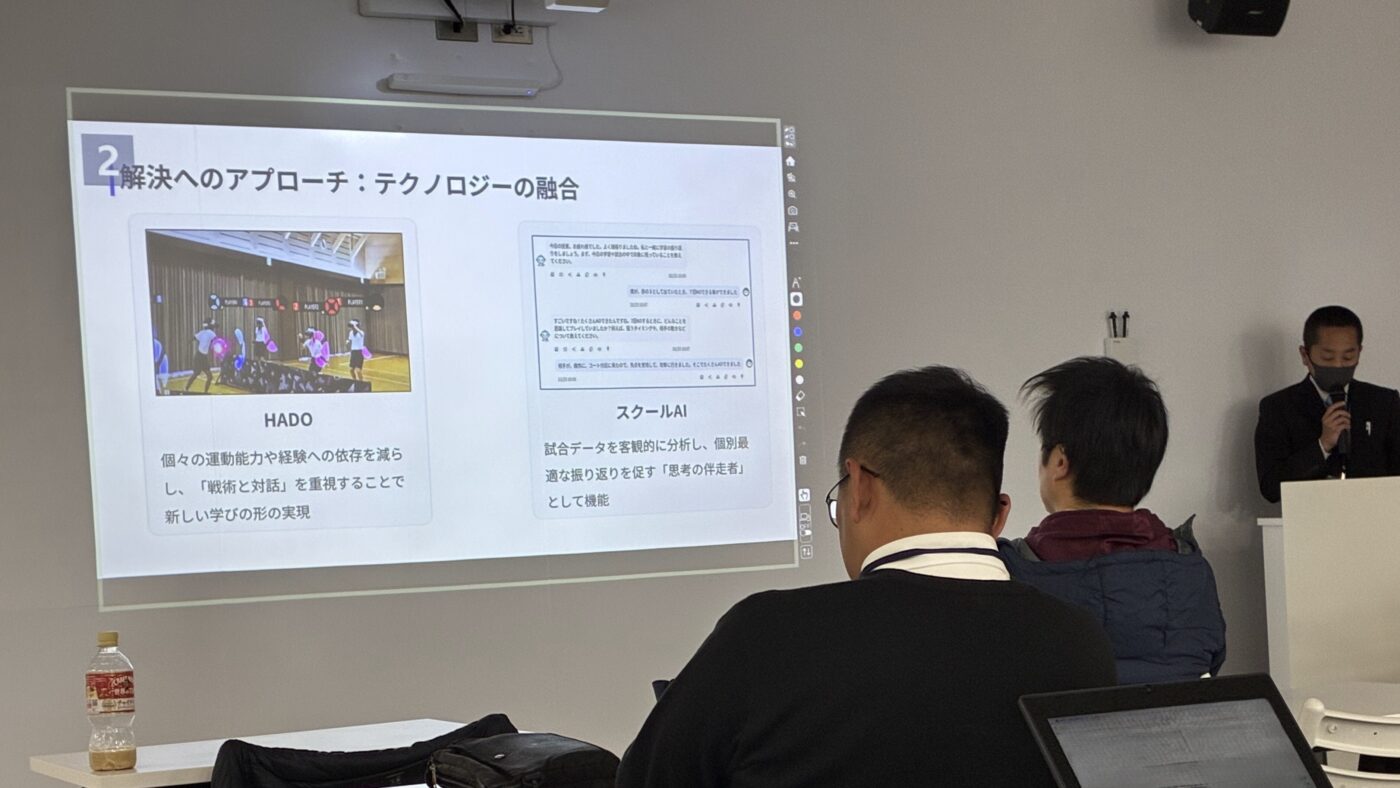
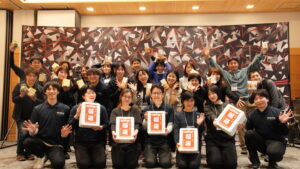
On Sunday, March 22, 2026, the “Thinking About the Future of Physical Education” symposium, a presentation on next-generation physical education classes and educational practices, was held at the Tennoji Campus of Osaka Kyoiku University. The event was organized by the Naoki Suzuki Laboratory at Tokyo Gakugei University. Approximately 100 people attended, including elementary, junior high, and high school teachers, university professors, researchers, education board members, and corporate representatives, representing a diverse range of backgrounds.
This symposium, building upon the achievements of the Japan Sports Agency’s “FY2025 Support Project for the Construction of Reiwa-era Japanese-style School Physical Education,” aimed to share cutting-edge approaches to physical education classes utilizing ICT, XR, and educational data, and to provide a forum for considering the future of physical education. Through the keynote symposium, parallel sessions, and overall commentary, multifaceted discussions unfolded on redesigning learning in physical education classes and creating classes that leave no one behind.
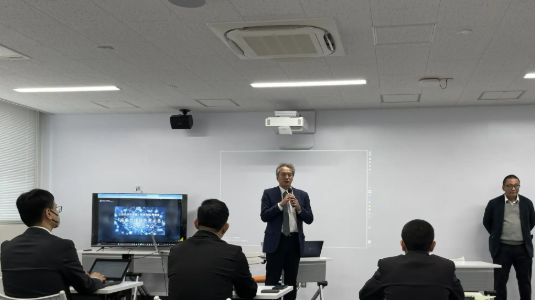
“A Forum to Consider the Future of Physical Education Together”: Professor Suzuki’s Opening Remarks
In his opening remarks, Professor Suzuki touched upon the progress of ICT-based physical education research in various countries around the world, stating that Japanese practices are also attracting international attention. He mentioned that the Suzuki Laboratory’s work has garnered international interest, including a visit from educators from New York, and that Japanese physical education practices are becoming a reference example for educational programs worldwide.
Professor Suzuki also posed the question, “What is physical education in the first place?” to the participants, emphasizing the importance of viewing physical education not merely as the acquisition of sports skills, but as “learning through physical activity” and “the joy of moving one’s body.” He stated that face-to-face interaction, collaborative activities beyond language barriers, and learning through the body are essential aspects of physical education that must remain unchanged, while also stating that long-held views and frameworks of teaching need to be re-examined. This outlined the direction of this symposium for considering the future of physical education.
Part 1: Opening and Keynote Symposium
The Importance of Technology: How Teachers Design Learning
In the keynote symposium of Part 1, the importance of not making the introduction of ICT, AI, and XR the goal itself was shared. In concluding the discussion, Professor Suzuki summarized that what is important when considering the future of physical education is not the technology itself, but how teachers discern and utilize it in their lessons.
Following Professor Mori’s questioning of existing conventions, Ms. Sato’s discussion of the possibilities of AI utilization, and Professor Fukushima’s point that “technology is not an end in itself, but an option that supports learning,” it was stated that future teachers will need the ability to question, choose, and flexibly design lessons while keeping children’s learning at the center.
Part 2: Parallel Sessions
Four Schools’ Practices Utilizing AR Sport “HADO” Reveal a Concrete Vision of the Future of Physical Education
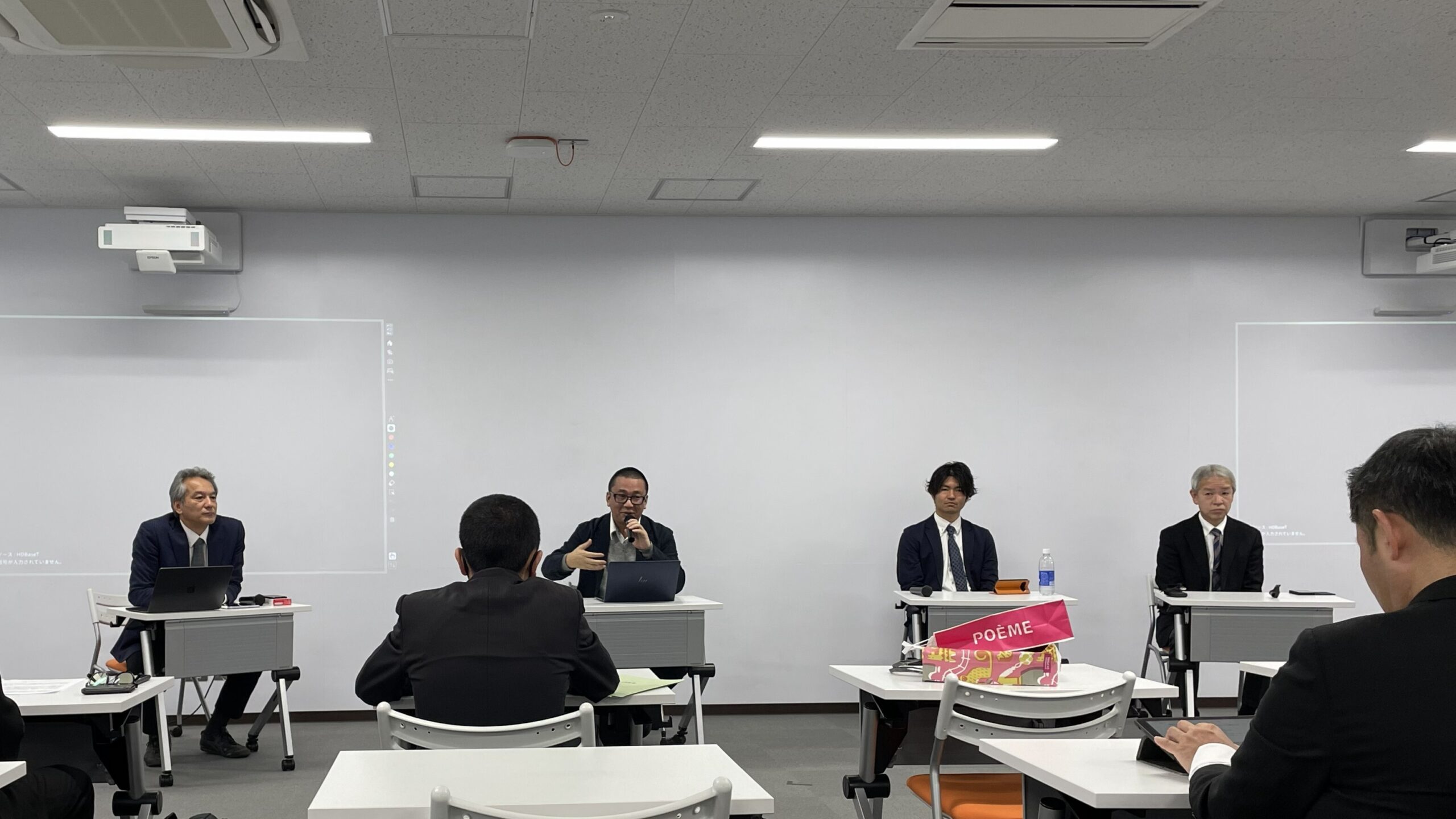
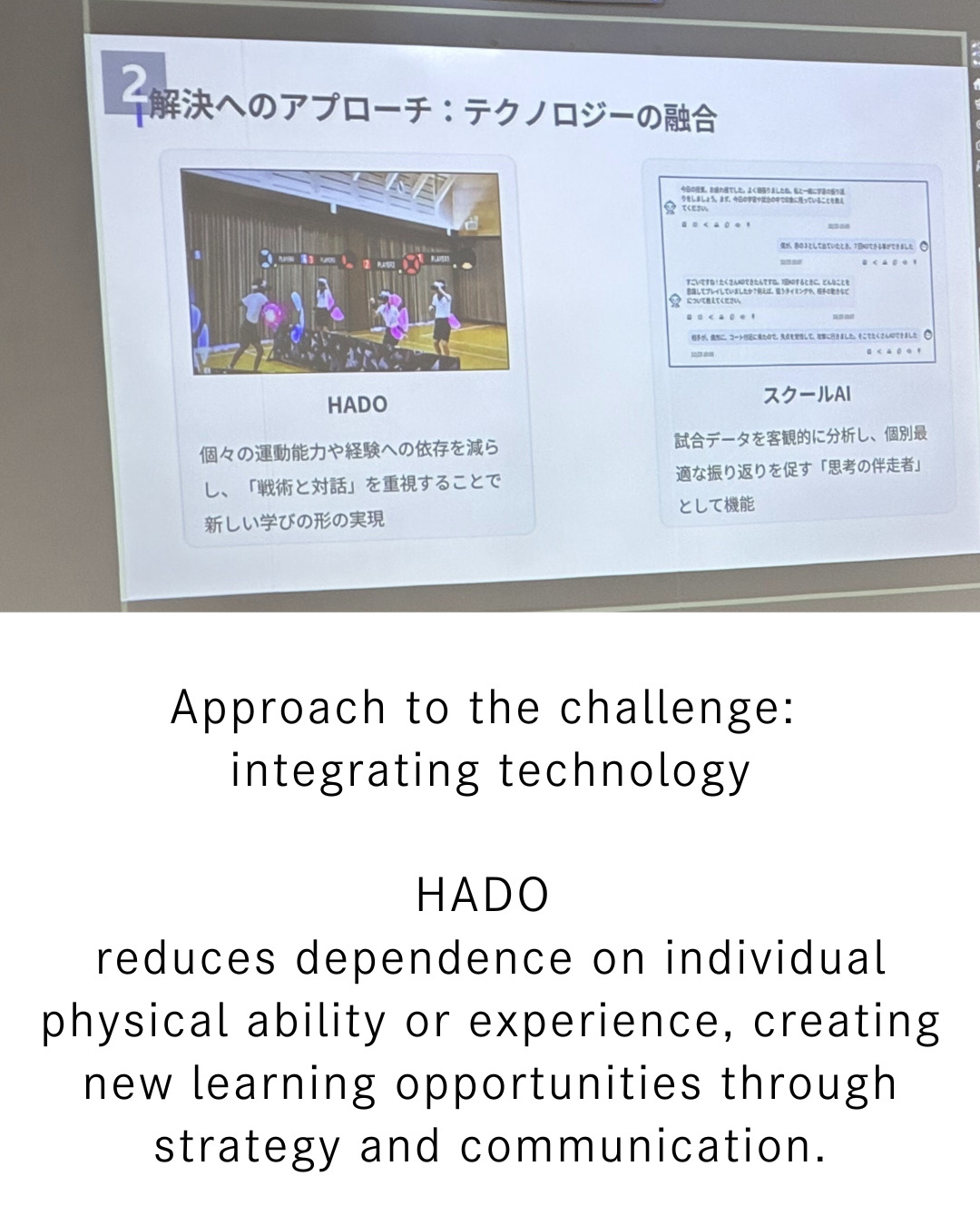
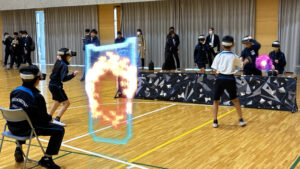
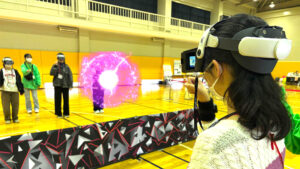
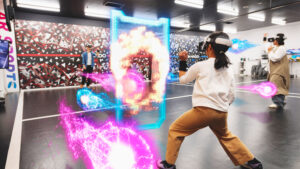
In the parallel sessions of Part 2, four schools presented their physical education practices utilizing the AR sport “HADO.” A common thread in all presentations was the positioning of HADO not merely as a new sports teaching material, but as a tool that prevents the fixation of skill differences, creates an entry point for everyone to participate, and enables deeper learning through tactics, dialogue, and reflection.
Ehime Prefecture, Shikokuchuo City, Kawanoe Elementary School
Data Visualization and AI for Lessons Where Each Student Implements the PDCA Cycle
The presentation from Kawanoe Elementary School introduced a lesson practice combining the digital characteristics of HADO with AI. Addressing common challenges in traditional physical education lessons—such as “ranking based on ability differences,” “difficulty in setting individualized goals,” and “negative attitudes towards mistakes”—they designed a lesson where each student learns by implementing the PDCA cycle through the visualization of play using HADO and dialogue with the school’s AI. The process of verbalizing tactics based on data and connecting them to subsequent practice fostered proactive learning and dialogue within the team. The children shared comments such as, “Even though I’m not good at physical education, I enjoyed being able to do something for the team,” and “The AI gave us detailed data, which made it easier to plan specific strategies for the next game.” The inclusive approach to physical education, where everyone can find their own way to contribute regardless of their athletic ability, was particularly impressive.
Tsukuba Municipal Midori Gakuen Compulsory Education School
AR and AI Pioneering “Leaving No One Behind” Inclusive Physical Education
Midori Gakuen’s presentation showcased their inclusive physical education practices utilizing the AR sport “HADO” and school AI. Recognizing the diversity and physical constraints inherent in a large school with approximately 1900 students and 19 special education classes, they focused on the common problem in traditional physical education where students participate but cannot actively engage. Through HADO parameter adjustments, role assignments, and objective reflection using AI, they developed a lesson plan that transcends athletic ability and disability, allowing everyone to find their own contribution.
It was particularly impressive that all students in the special education classes responded that they “had fun,” and that there was a shift in attitude from “exercise is hard” to “exercise is fun.” The presentation effectively conveyed the vision of “physical education where everyone can participate with a role,” transcending skill differences, disabilities, grade levels, and the constraints of a large school, all through HADO.
Tokyo Gakugei University Attached Setagaya Junior High School Practical Approaches to Ensuring Individual Learning While Fostering Collaboration
In a presentation by Tokyo Gakugei University Attached Setagaya Junior High School, it was reported how HADO can support individual learning and collaboration with peers in physical education classes where there are significant differences in athletic ability. In existing ball games, the presence or absence of basic skills directly impacts ease of participation, and anxiety about making mistakes can lead to student passivity. On the other hand, in HADO, everyone can release energy balls and everyone can protect with shields, making it easy for even students who are not good at sports to get into the game.
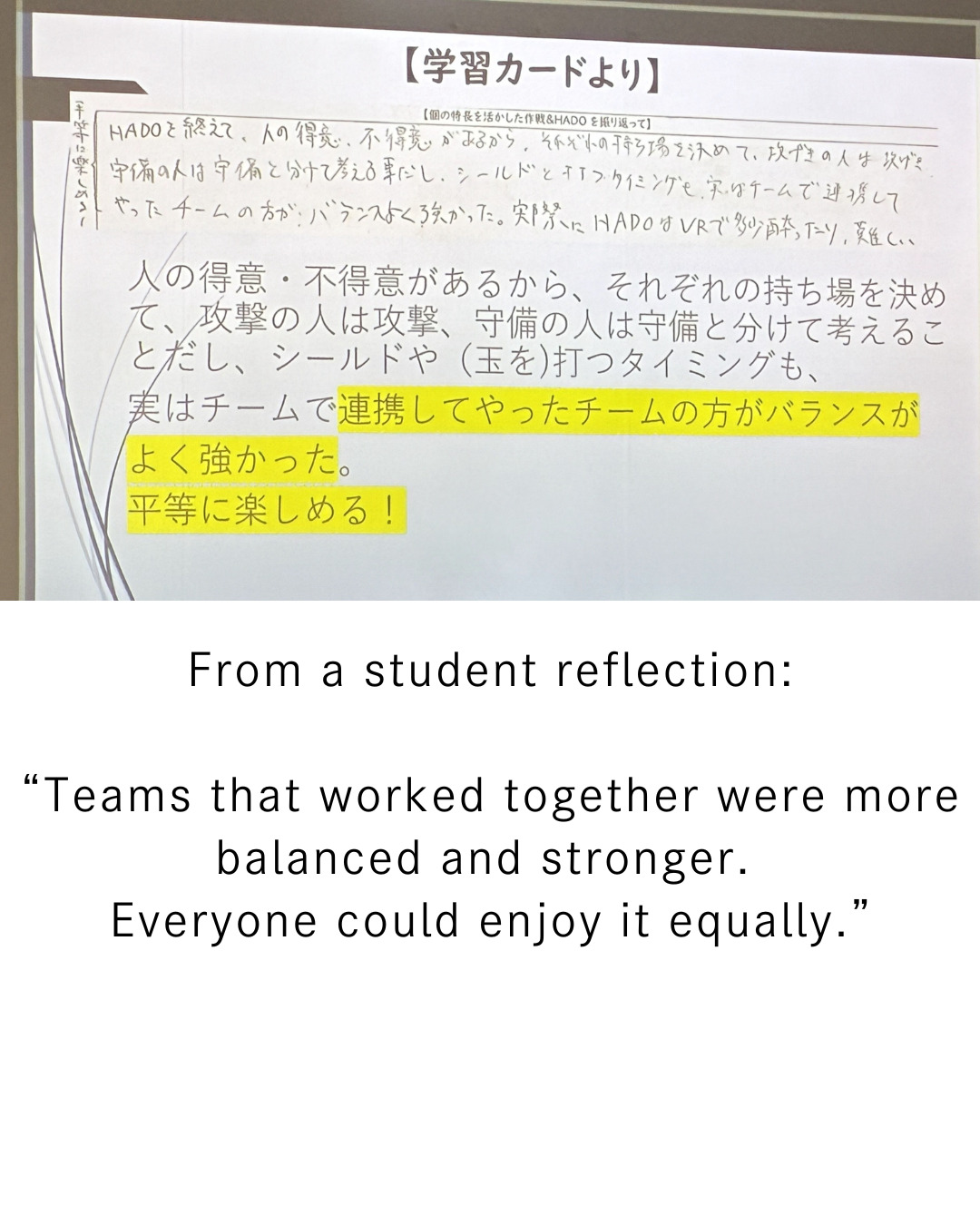
Furthermore, as the lesson progressed, it was shown that students taught each other about timing, roles, and defensive techniques, and realized the strength of a cohesive team. Learning cards included comments such as “The team that worked together was more balanced and stronger” and “It’s enjoyable for everyone,” indicating that the structure, where awareness and consultation contribute to the team rather than simply ranking based on skill differences, naturally fostered mutual teaching among students.
Shizuoka Prefectural Shizuoka Nishi High School
Practical Application of Connecting Student Reflection, Safety Management, and Teacher Lesson Improvement with AI
Shizuoka Prefectural Shizuoka Nishi High School presented not only classroom practices utilizing HADO, but also the overall design of physical education classes combining school AI and heart rate monitors. In HADO, students reflect on their own play while interacting with the AI between games, accumulating their learning as learning cards. Meanwhile, reports showed that students with physical limitations actively participated in HADO games and strategy meetings, creating new opportunities for participation for students who would typically be relegated to observation in traditional physical education classes.
Furthermore, the AI provided feedback to teachers based on the learning records and heart rate data of all students, indicating the state of the class group and signs of students needing support, functioning as a system to support “creating lessons that leave no one behind.” A key feature was the positioning of AI not only as a companion for students, but also as a companion for teachers’ lesson design.
Part 3: Overall Summary
“New Physical Education”: Lesson Design and Teacher Communities
In his overall remarks, Professor Yoshinori Okade stated that when considering the use of ICT and AI, it is not the technology itself that matters, but rather what we want students to learn and how to design lessons to achieve that. He emphasized the need to design lessons that are appropriate for the children in front of them, taking into account conditions such as lesson time, teachers, facilities, and evaluation frameworks, and pointed out the importance of re-examining what the practice is trying to achieve, rather than focusing on whether it is “new or old.”
Furthermore, he explained that in future physical education, it will be important to visualize and evaluate not only the results of knowledge and skills, but also the process by which children learned. He stated that ICT should not be used to separate people, but rather to support learning and relationships, and that for this to happen, communities where teachers learn from each other and share practices are indispensable.
Event Overview
Name: Next-Generation Physical Education Class and Educational Practice Presentation Symposium “Thinking about the Future of Physical Education”
Date and Time:
Sunday, March 22, 2026, 14:00-17:30
Venue:
Osaka Kyoiku University, Tennoji Campus


EXPAND HADO
IN YOUR REGION
REACH OUT

Proud supporter of the Tokyo 2025 Deaflympics.
A future sport for everyone to enjoy.